

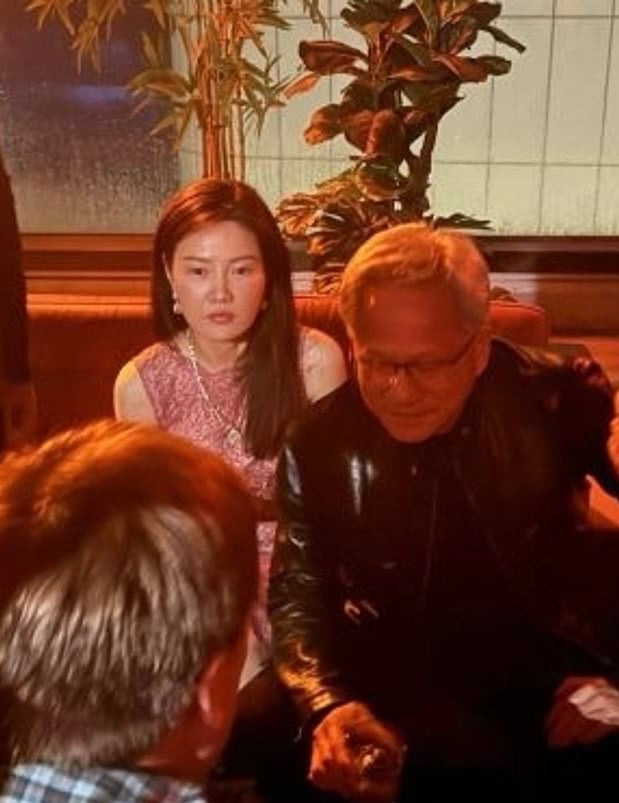
The chief executive told staff he was “unfaithful” to his wife, and Nvidia’s board has opened an investigation. The New York Times has reported that Marco Rubio knew of the relationship. The allegations about the woman’s activities are unproven.
Jensen Huang, the chief executive of Nvidia, has admitted in a memo to staff that he was unfaithful to his wife, as the company investigates reports that he was targeted by foreign espionage. The 63-year-old wrote on Sunday: “I was unfaithful to my wife. My actions hurt her and our children. There is no excuse for what I did,” according to The New York Times. The affair became a concern for the US government because of claims that the woman involved, Alice Huang, was passing information to Beijing. Mr Huang has not acknowledged that allegation, and Ms Huang has not been convicted of any offence.
The memo and the board’s response
The New York Times reported that Mr Huang’s message to staff was sent on Sunday. The Financial Times separately confirmed that he acknowledged an extramarital affair in an internal message. His admission relates only to the affair and does not address whether the woman was working for Chinese intelligence.
Mr Huang and his wife, Lori Mills Huang, have two adult children, Madison and Spencer, and had been married for 41 years, according to the report.
Nvidia confirmed on 8 November that its board had launched an independent investigation. The board said it had “no reason to believe that either national security or Nvidia secrets were compromised” because of the relationship, but that it “will examine all available information”, according to the New York Times and Reuters. Mr Huang supports the review “and has committed to cooperating with it”, the board added. The inquiry has reached no public conclusion, and the board’s statement is an initial assessment and not the result of a completed review.
What US intelligence reportedly suspected
According to New York Times reporting carried by The Business Times, US intelligence assessed that China’s Ministry of State Security had recruited Ms Huang to gather information about Nvidia’s chief executive. The New York Times reported that surveillance footage showed her delivering information to Beijing, as set out in a US intelligence memo that was previously reported. Investigators also reportedly suspected an attempt to influence Nvidia’s position on exporting advanced artificial intelligence chips to China, which are subject to US export controls. The memo was reportedly circulated among senior Trump administration policymakers in spring 2026. It has not been published, so its conclusions cannot be independently checked.
Nvidia has disputed the idea that its customer relationships involve sharing sensitive information. A spokesperson said Asian cloud customers receive ordinary commercial information, not confidential trade secrets or national-security material, according to Investing.com. The company had earlier described Mr Huang’s interactions with Ms Huang as ordinary customer meetings, and said its chief executive meets thousands of customer executives each year, ABC News reported. That response came before his admission of an affair.
China’s Foreign Ministry publicly rejected the original espionage reporting on 30 October. Spokesperson Guo Jiakun called the allegations baseless, ABC News reported. No criminal conviction establishes that Ms Huang was working for the Ministry of State Security.
Rubio and the Trump administration
An earlier New York Times article reported that Secretary of State Marco Rubio knew about Mr Huang’s relationship but kept him within President Donald Trump’s orbit. A further New York Times report on 8 November said Mr Rubio took part in drafting or circulating a warning memo, and that senior officials were concerned about the alleged relationship by spring 2026. Axios reported that Mr Trump was briefed on the intelligence concerns and chose not to act.
No publicly released memo shows what Mr Rubio told Mr Trump, when the President was informed or what advice officials gave. The reports do not establish that Mr Rubio knowingly allowed espionage or that Mr Trump knowingly ignored confirmed criminal activity.
Congress seeks a briefing
Three congressional committee chairmen have asked Mr Huang to attend a closed-door briefing on 18 November. They are Brian Mast of the House Foreign Affairs Committee, John Moolenaar of the House Select Committee on China and Rick Crawford of the House Intelligence Committee. Their letter was sent on 4 November and published the next day, before Mr Huang’s admission. It gives him until 11 November to accept or suggest another date.
The briefing would cover his dealings with Ms Huang and Nvidia’s safeguards against foreign espionage. Congress has not publicly accused Mr Huang of espionage or of knowingly disclosing classified information. The request is not a subpoena, and no finding of wrongdoing has been announced.
Singapore’s denial and the Megaspeed inquiry
Singapore’s Ministry of Home Affairs issued a rebuttal on 31 October, denying reports that its authorities had investigated Ms Huang over suspected links to Chinese intelligence. It said Singaporean officials had not told the Wall Street Journal they were concerned about her relationship with Mr Huang, and disputed the newspaper’s account of Singapore’s role.
The ministry confirmed, however, that a separate investigation into Megaspeed remains under way. Megaspeed is a Singapore-based data-centre company that buys Nvidia AI chips and supplies computing capacity to customers. Reuters reported on 5 November that US authorities had examined whether it helped Chinese customers obtain restricted Nvidia chips. Those suspicions are separate from the reported relationship involving Mr Huang.
Singapore also said four individuals and four companies faced fraud charges between February 2025 and July 2026 over purchases of computer servers, with penalties of up to 20 years’ imprisonment. It did not say these cases involved Ms Huang. The ministry said Singapore does not automatically enforce other countries’ unilateral export restrictions, but that it will pursue fraud and dishonest commercial activity involving companies based there.
