

Researchers at Imperial College London have found a way to produce myoglobin, the protein responsible for meat’s colour and flavour, inside the leaves of lettuce and tobacco plants, offering a possible new route to more sustainable plant-based meat ingredients.
Scientists at Imperial College London have developed a method of cultivating myoglobin, the animal protein that gives meat its distinctive red colour and umami flavour, inside lettuce and tobacco plants. The technique, described in the peer-reviewed journal Frontiers in Plant Science, involves engineering the plants’ chloroplasts, the structures responsible for photosynthesis, to produce the protein. According to lead researcher Dr Alexia Groff, the approach “could provide a more sustainable way to produce an important ingredient for plant-based meat products.” The study is the first to report stable myoglobin production in higher plants using chloroplast engineering.
How the process works
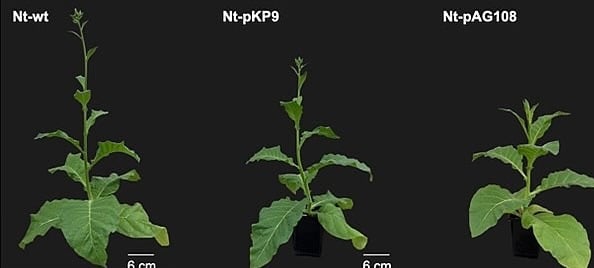
To create the modified plants, researchers cloned the genes responsible for pig and cattle myoglobin before using a so-called “gene gun” to fire copies directly into the chloroplasts of tobacco and lettuce seedlings. Porcine myoglobin was successfully produced in both tobacco and lettuce, while bovine myoglobin was also expressed in the green microalga Chlamydomonas reinhardtii as part of the wider study.
Dr Groff explained the choice of plants: “We used tobacco because it is the best model plant for developing this technology, and lettuce because it is an edible crop that could eventually be used for food ingredient production.” Tobacco is widely used in plant biotechnology because it grows quickly, is straightforward to modify genetically, and produces large volumes of leaf material, making it a useful research model despite not being a food crop itself.
Notably, the researchers do not envisage consumers eating genetically modified lettuce directly. Instead, the intention is for the myoglobin to be extracted and purified from the plant material before being used as an ingredient elsewhere.
Why chloroplasts, not the plant’s nucleus
The decision to target chloroplasts rather than the plant’s nucleus, the more conventional site for genetic engineering, appears central to the study’s results. Each plant cell contains numerous chloroplasts, and each of those contains multiple copies of DNA, allowing for significantly higher protein output than standard genetic engineering methods. Myoglobin production reached 2.7% of total soluble protein in tobacco and 1.5% in lettuce, outperforming nuclear-based insertion techniques.
The approach may also carry a safety advantage. Because chloroplasts in many crop species are inherited mainly through the maternal line, engineering their DNA rather than the plant’s nucleus can reduce the risk of modified genes spreading through pollen.
Researchers also found that the modified plants remained healthy and fertile, successfully passing the inserted genes on to the next generation, evidence of stable inheritance of the trait. The study additionally examined whether producing an animal protein placed any strain on the plants themselves, finding only limited effects on photosynthesis, and suggesting that plants can tolerate manufacturing substantial quantities of the protein without significant harm.
Yield, structure and current limitations
Measurements showed myoglobin yields of approximately 800mg per kilogram of tobacco and 810mg per kilogram of lettuce. By comparison, real meat typically contains between 8.1 and 11.2mg of myoglobin per gram. “Despite this, plant cultivation is far more resource efficient than livestock production,” the researchers said.
Importantly, the myoglobin produced within the plants was found to fold correctly into its natural three-dimensional structure, a key requirement if it is to behave like animal-derived myoglobin in food applications. One limitation identified by the team was that only around 35% of the plant-produced myoglobin successfully bound to heme, the iron-containing molecule that contributes to meat’s characteristic taste, smell and appearance, compared with roughly 80% in laboratory-produced bacterial myoglobin. The researchers believe increasing the availability of heme within the plant could improve this figure.
Replicating heme binding has long been a significant obstacle for plant-based meat manufacturers, since it plays a central role in how cooked meat tastes and smells. Similar heme proteins are already used in some commercial plant-based meat products, though these are typically produced through precision fermentation using genetically engineered microorganisms rather than through plants.
A more sustainable production method
Much of current fake meat production relies on microbial engineering, in which animal proteins are inserted into the genome of bacteria or yeast for mass production in industrial bioreactors under sterile conditions. The Imperial College London team set out to establish whether the same principle could be applied using plants instead.
The researchers argue that plant-based production could reduce dependence on such microbial fermentation systems. Plants, they note, could instead be grown using conventional agricultural methods, with the target protein extracted afterwards. Plant molecular farming of this kind is not without precedent: it is already used to manufacture products including vaccines, antibodies, enzymes and therapeutic proteins, demonstrating that plants can function as viable biological production systems more broadly.
Compared with livestock farming, plant-based protein production has the potential to require significantly less land, water and feed, while generating lower greenhouse gas emissions, although the researchers caution that commercial-scale production methods have yet to be demonstrated. The study itself notes that livestock farming contributes substantially to greenhouse gas emissions, land use and freshwater consumption, forming part of the motivation for exploring alternative means of producing animal-derived proteins.
Climate context
The research arrives at a significant moment for the UK’s approach to food and emissions. Energy Secretary Ed Miliband has warned that households will need to cut back on meat and dairy consumption, having signed up to a legally binding target to reduce the UK’s carbon emissions by 87% by 2040. Meeting that goal, according to the target, will require households to eat 25% less meat and around a fifth less dairy.
What happens next
The study’s authors describe the findings as a proof of concept rather than a market-ready technology, and stress that considerable further work, including scaling up production and securing regulatory approval, would be required before plant-derived myoglobin could become a commercial ingredient in meat alternatives. Any future use in food would first need to satisfy food safety and regulatory assessments covering its safety, nutritional characteristics and method of production.
The team’s next challenge is developing a cost-effective way of purifying the protein, since extracting proteins from plant tissue at an industrial scale is often among the most technically demanding and expensive stages of production. Dr Groff said: “The myoglobin could be extracted from leaves and purified using industrial protein purification methods. Since it is identical to animal myoglobin, it could then be added as an ingredient to plant-based meat products to improve their colour, flavour and nutritional value.”
The researchers also suggest the underlying technology could eventually extend beyond myoglobin to other animal proteins produced inside plants, potentially opening the door to manufacturing meat-alternative ingredients at an agricultural scale. As they put it: “Plant-derived Mb [myoglobin] could achieve protein yields per hectare that rival – or even potentially exceed – those of animal agriculture, while also benefiting from substantially lower water use and greenhouse gas emissions.”
Commenting on the findings, Professor Derek Stewart, co-director of the National Alternative Protein Innovation Centre (NAPIC) at the James Hutton Institute, described the study as “an exciting step forward proving the concept that plants can be used to make myoglobin, a key meat protein, in a stable and scalable way.” He added: “It is especially encouraging that the protein could be recovered in a form that was properly folded and bound to heme, which matters for meat-like colour and flavour.”
