

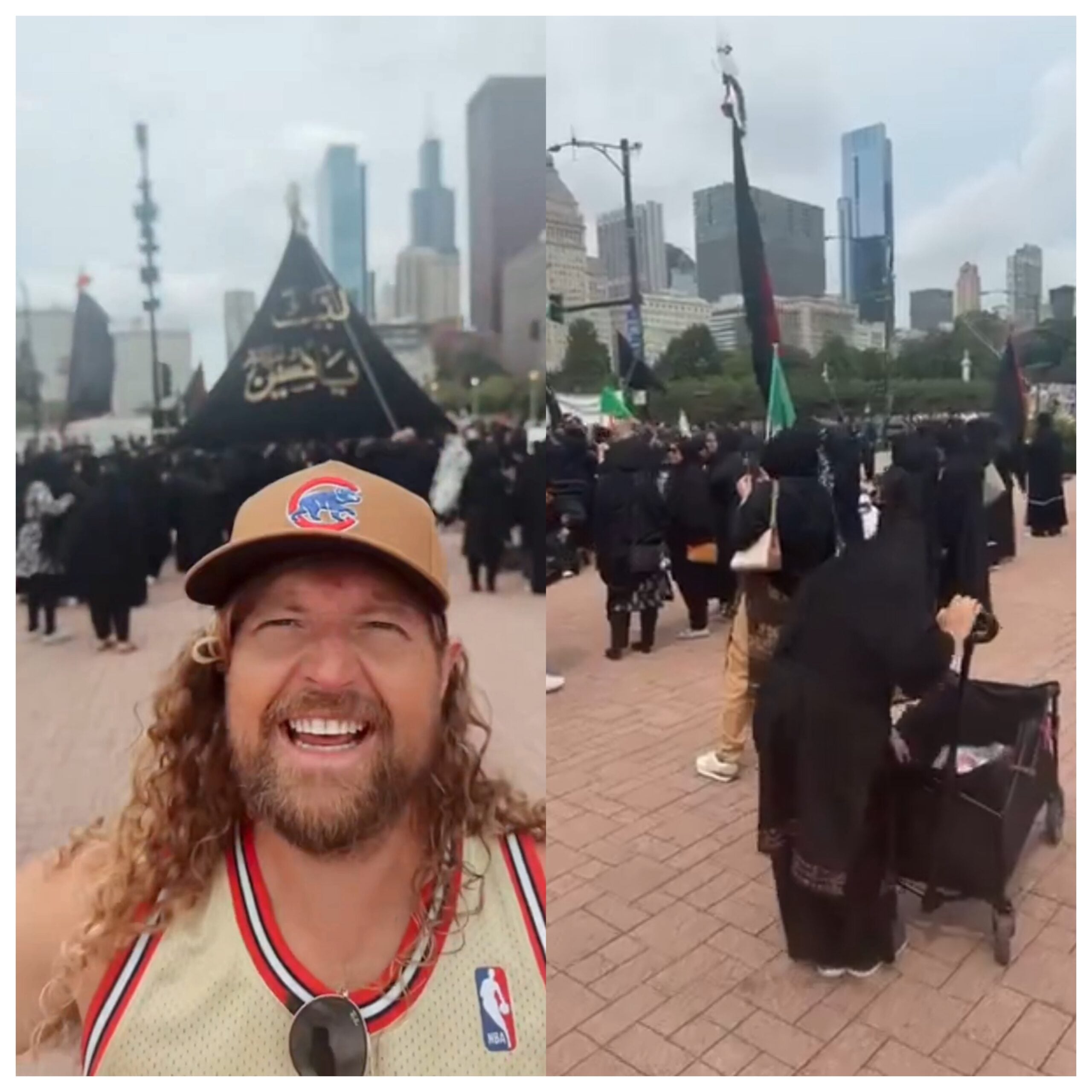
A Christian worship march led by evangelist Sean Feucht briefly overlapped with a Shia Muslim Arbaeen procession in downtown Chicago on 9 August, as both events shared the same streets around the same time, drawing significant online attention despite no reports of disorder.
A Jesus March organised by American worship leader Sean Feucht briefly overlapped with a Muslim Arbaeen procession in downtown Chicago on 9 August, after both events used overlapping streets around the same time. Footage shared online showed Christian participants carrying worship signs and crosses moving through crowds of Shia Muslim marchers dressed in black and waving green, black and red flags associated with the Arbaeen commemoration. Feucht described the encounter on social media as a “holy confrontation,” questioning “which God America will worship.” Chicago Police were present throughout, and no major incidents were reported.
What the two events were
The Jesus March formed part of Feucht’s wider Let Us Worship Tour, a national series of public worship, prayer and evangelism events he has organised across numerous American cities. Feucht founded the Let Us Worship movement in 2020 and has since built a reputation as a Christian worship leader, author and activist centred on outdoor public worship gatherings.
The Markazi Arbaeen procession, meanwhile, commemorates Arbaeen, one of the most significant observances in Shia Islam. Held 40 days after Ashura, the occasion marks the martyrdom of Imam Hussein, grandson of the Prophet Muhammad. Chicago is home to one of the largest Muslim communities in the United States, including a substantial Shia population that organises annual Arbaeen processions through the city.
How the overlap unfolded
Videos circulating online showed the two events briefly crossing paths along sections of downtown Chicago. Christian marchers were seen carrying crosses and worship banners, while Shia participants carried the traditional black, green and red flags associated with Arbaeen commemorations. According to available reports, organisers from both groups had obtained the necessary permissions to hold their respective events, and the overlap appears to have resulted from coinciding routes and timings rather than any coordinated confrontation between the two groups.
Chicago Police officers were present to manage traffic and maintain public order as both processions moved through the city, and there were no widespread reports of violence or significant public disorder during the overlap.
Feucht’s remarks and online reaction
Addressing the encounter on social media, Feucht described it as a “holy confrontation,” a characterisation that reflects his personal interpretation of the event rather than any official account. The moment generated extensive discussion online, with reactions ranging from those describing it as a bold and peaceful expression of Christian faith to others raising concerns about the rhetoric surrounding the event or the potential for heightened religious tension.
Legal context
Both the Christian march and the Muslim procession took place under First Amendment protections, which guarantee freedom of religion, freedom of speech and the right to peaceful assembly, subject to local permitting requirements and public safety considerations. The episode has become one further example of how large public religious gatherings in major US cities can attract substantial attention online, particularly when competing narratives about the same event circulate simultaneously on social media.
