

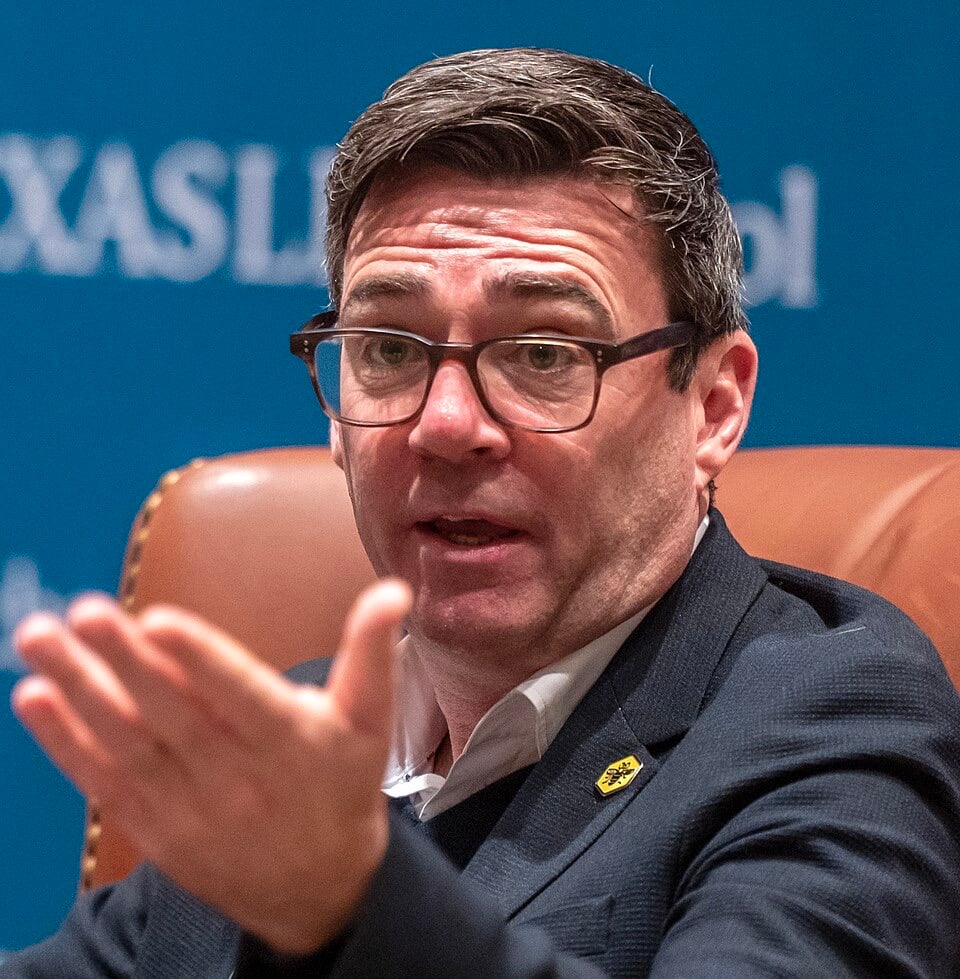
Labour’s council funding formula would take millions from rural areas while urban authorities gain billions, according to the figures in the Daily Mail’s report. Ministers say funding is being matched more closely to need.
Andy Burnham has been accused of waging a “war on the countryside” after Labour’s council funding changes were reported to take £61m from rural councils over three years. Urban areas are set to receive an extra £2.9bn. Local leaders warn that villages could lose vital services as councils struggle with rising inflation and soaring social care costs. The Government says it is directing money to poorer areas with cheaper properties and greater demand for social services.
The row
The source reports that the formula will strip £61m from councils in the shires and vales over three years. One unnamed council chief warned that some villages could “die” as libraries, bus services and other amenities face the axe. Rural leaders argue the changes ignore the higher cost of delivering services across sparsely populated areas, where residents often live far from essential amenities.
The row follows earlier accusations that Labour is targeting the countryside through its inheritance tax changes affecting farmers.
The research notes could not reproduce the £61m and £2.9bn figures from the official tables. Their classification, baseline and calculation period need identifying before they are presented as government-confirmed totals. The notes also point out that the settlement covers England only, as local government finance is devolved elsewhere in Britain. A cut in government grant is not the same as a cut in a council’s overall budget, because spending power also includes council tax and retained business rates. The evidence does not show that the formula was designed to punish rural communities.
What councils say
According to the notes, the County Councils Network (CCN) estimated in January that county and large rural unitary councils face a cumulative gap of about £11bn over three years. That reflects expected pressures on service budgets, not a direct withdrawal of grants. It said annual spending pressures would rise by £7bn by 2028-29, with extra grants under the provisional settlement covering about 2% of the increase. On 29 September, the CCN repeated its warning ahead of the Autumn Budget on 28 October.
The CCN’s January survey suggested possible reductions, which are not confirmed closures:
- eight in ten councils said cuts to waste and recycling had become more likely
- seven in ten were considering cutting library spending or opening hours, and a similar share were more likely to cut leisure and adult social care
- six in ten reported a greater likelihood of cuts to bus subsidies and public transport
- eight in ten said redundancies were more likely
- almost a quarter warned they might need exceptional government financial support
Individual authorities have set out their position:
- Herefordshire: The council estimates a budget gap of up to £30m, with a projected £17.3m cut in central funding by 2028-29. It had already lost £7.1m after the Rural Services Delivery Grant and Services Delivery Grant were removed. It warned council tax rises of 4.99% a year might be needed.
- Shropshire: The council said its government funding per resident could be 29% below the national average by 2028-29, citing Rural Services Network analysis. It was about £450 per resident in 2025-26, against £485 for the average rural upper-tier authority and £516 for upper-tier authorities nationally.
- Suffolk: The council identified a £6m gap, about £3.5m worse than before the draft settlement. Deputy leader Richard Smith blamed the redistribution towards metropolitan areas, according to the House of Commons Library.
- Westmorland and Furness, and Wiltshire: Liberal Democrat cabinet member Andrew Jarvis and Wiltshire leader Ian Thorn challenged the methodology, saying rural authorities face different pressures from metropolitan councils, the Commons Library reports.
The Rural Services Network estimates urban councils will receive about 32% more government-funded spending power per resident than rural ones in 2026-27. Herefordshire’s papers cite a larger gap of about 41% between the most urban and most rural councils, and say residents of the most rural areas could pay about 20% more council tax. The differences reflect different comparison groups.
What changed in the settlement
The Commons Library says the dedicated Rural Services Delivery Grant, which ran from 2015 to 2025 and grew from £16m to about £80m to £85m a year, is absent from the 2026-29 settlement. Replacement formulas include no equivalent general rural grant. Ministers kept a limited remoteness adjustment in adult social care funding and raised the distance cap in the transport formula for special educational needs school transport from 20 to 50 miles.
The Government’s response
Ministers introduced transitional protections, with income floors guaranteeing either 100% or 95% of a council’s 2025-26 baseline, which do not prevent real-terms cuts. The final settlement included an extra £740m beyond the provisional allocations, and a £440m uplift to the Recovery Grant, bringing it to £2.6bn across the period. The Government says nine in ten councils will receive funding broadly matching assessed need by the end of the three years, up from about a third. That is its own assessment and does not answer rural councils’ objections to how need is measured.
The Local Government Association (LGA) has warned that councils across England will face a £7bn funding gap in 2028-29 even after the settlement. It says council spending power remains about 12.4% below its 2010-11 level in real terms this year, and will still be 8.3% lower in 2028-29. Special educational needs school transport budgets rose by nearly 80% in real terms between 2019-20 and 2025-26.
