

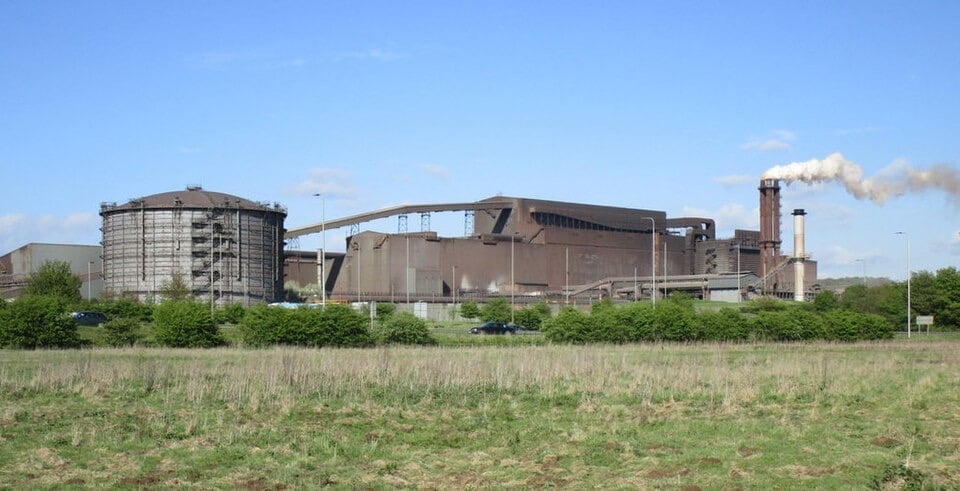
British Steel has formally passed into public ownership, with the government confirming the move took effect on 16 July following Royal Assent for the Steel Industry (Nationalisation) Act. Prime Minister Keir Starmer said the decision secures the future of steelmaking in the UK, while Business Secretary Peter Kyle said British Steel “now belongs to the British people” as ministers set out plans to stabilise the company and move it towards a sustainable, low-carbon future.
The Steel Industry (Nationalisation) Act received Royal Assent on 15 July 2026, with British Steel transferring into public ownership the following day through regulations signed by Industry Minister Chris McDonald. The move brings to a close a process that began in April 2025, when the government first intervened to keep the company’s blast furnaces running after Jingye Group, British Steel’s Chinese owner since 2020, drew up plans to close them, a step ministers said would have triggered a disorderly closure and put steel production, supply chains and thousands of jobs at risk.
Why ministers chose nationalisation
According to the government, extensive discussions with Jingye over the following months failed to produce an agreement that would secure the company’s future while delivering value for taxpayers. Having assessed the impact on the economy, critical infrastructure and national security, the Business Secretary concluded that public ownership offered the best route to protecting the company’s future and the UK’s broader steelmaking capability and supply chains. Parliament has now granted the powers needed to act, with ministers describing the decision as the right and necessary course once those powers were secured.
Starmer framed the intervention as central to Britain’s industrial identity. “British Steel is part of the fabric of our nation and a cornerstone of Britain’s industrial strength,” he said. “Today’s decision secures the future of steelmaking in the UK, protects skilled jobs and safeguards a vital national capability. This Government will always act in the national interest to support British industry, strengthen our economy and ensure the industries we rely on can thrive long into the future.”
Kyle set out his reasoning in similar terms, framing the move as both an economic and strategic necessity. “British Steel is one of the nation’s biggest steel producers, and I’ve made the decision to nationalise the business to secure steelmaking capability and maintain production in the national interest,” he said. “British Steel now belongs to the British people, and our focus is on the future: stabilising the business, backing the communities that rely on it and building a sustainable, competitive and decarbonised steel sector for the years ahead.”
Why Scunthorpe matters strategically
At the heart of the government’s case is the Scunthorpe site, which houses the UK’s last remaining blast furnaces and represents the country’s only facility capable of producing steel from raw materials. Ministers regard this capability as essential to preserving Britain’s ability to produce steel domestically, given the material’s role in major construction projects, transport networks, energy infrastructure, defence, and the government’s Modern Industrial Strategy more broadly.
The cost and the compensation process
Figures previously released to MPs put the cost of the government’s intervention at British Steel at £555million so far. Now that the company has formally entered public ownership, the Act requires an independent valuer to be appointed to determine whether any compensation is payable to former stakeholders, with a compensation scheme expected to be established through regulations in the autumn.
What happens next for the business
The newly appointed leadership team, made up of Non-Executive Directors, has been tasked with stabilising operations on site, managing health and safety, maintaining production, and working alongside management, trade unions and staff to develop plans for a commercially sustainable, low-carbon business. British Steel employs around 3,500 people at Scunthorpe directly, with thousands more jobs supported through its wider supply chain.
Chancellor Rachel Reeves framed the decision as part of a broader economic strategy. “Bringing British Steel into public ownership is the right thing to do so we can stabilise the business going forward, protect UK steelmaking and the communities it supports,” she said. “We are backing British industry and investing in the industries that create growth – with steel vital to our security, resilience and economic strength.”
Despite the shift to public ownership, ministers have stressed they have not ruled out private investment in future, provided it supports the company’s long-term sustainability. Officials have described public ownership as an immediate platform from which to stabilise the business while exploring options for its longer-term direction, including possible private sector involvement further down the line.
Reaction from British Steel and unions
British Steel’s interim chief executive, Allan Bell, described the nationalisation as a defining moment for the company and the wider industry. “This is a momentous day for British Steel, and everyone connected with our business – our dedicated employees, our valued customers and suppliers, and the tens of thousands of people in our supply chains and local communities,” he said. “Much more than that, it is an historic day for Britain and UK manufacturing – one which safeguards our future and strengthens national security and infrastructure. We are grateful to the UK Government for the decisive action it has taken, and the support it has given our business – and our people – during such a challenging period. Together, we look to the future with great optimism and will work together to make the world-class steel Britain needs now and for decades to come.”
Trade unions also welcomed the move. Community union general secretary Roy Rickhuss CBE said: “We at Community offer our thanks to this Government for passing this important piece of legislation, which will help to secure the long-term future of the UK’s steel sector. Steel is the lifeblood of so many communities in the UK and this new law will help to safeguard thousands of jobs, ensuring greater stability in an industry which has had to weather many storms in recent years.” Charlotte Brumpton-Childs, GMB National Secretary, added: “The Government has taken timely, decisive intervention on British Steel – as it has throughout this process. It’s no exaggeration to say Ministers have saved the UK steel industry. But the hard work to keep it alive starts here; beginning with a commitment to public infrastructure projects to buy British.”
Part of a wider steel strategy
Today’s nationalisation builds on the government’s Steel Strategy, published in March and backed by up to £2.5billion of investment, which set an ambition for up to half of the steel used in the UK to eventually be made domestically. That strategy has already been accompanied by a trade measure reducing tariff-free steel import quotas by 51 per cent, £500million in support for Tata Steel’s green steel transformation at Port Talbot, and hundreds of millions of pounds a year in energy cost support for steel firms through the Supercharger and British Industrial Competitiveness Scheme. Ministers have described a strong domestic steel industry as central to the government’s wider ambitions to reindustrialise Britain, strengthen national resilience, and reduce reliance on overseas supply chains for materials considered strategically important.
