

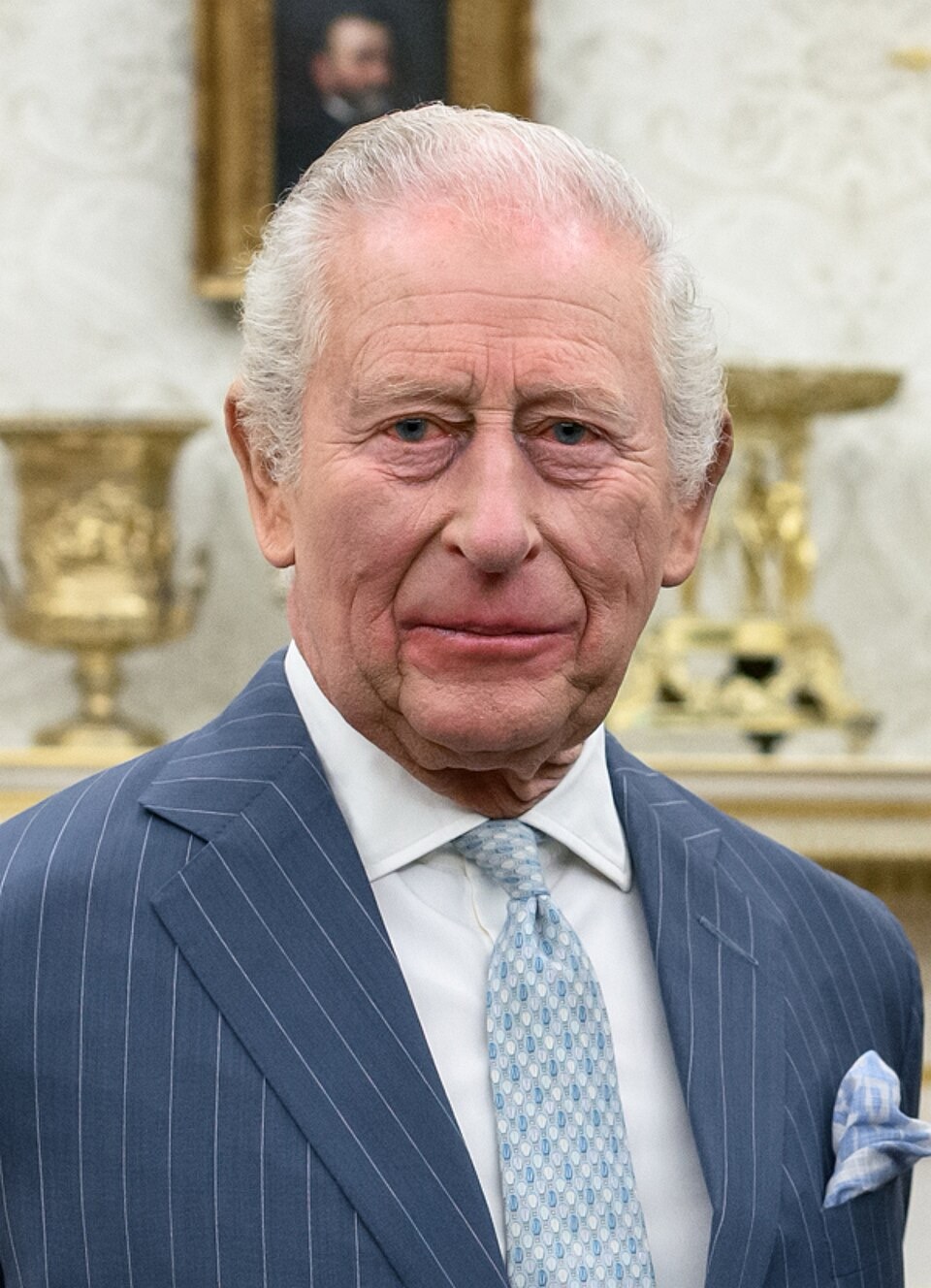
King Charles formally launched the UK Space and Defence Gateway at the Harwell Science and Innovation Campus in Oxfordshire, meeting astronauts Tim Peake and John McFall as he called for better stewardship of the space environment through his Astra Carta sustainability initiative.
King Charles officially opened the UK Space and Defence Gateway at Harwell Science and Innovation Campus in Oxfordshire on Friday, a new hub designed to bring together government, industry, academia and international partners to accelerate innovation across the UK’s space and defence sectors. During the visit, the King unveiled a commemorative plaque marking the launch, viewed models of space technology including satellites, and spoke with representatives from partner organisations including the European Space Agency, Astroscale, Oxford Space Systems and Space Solar.
A Call to Better Manage the Space Environment
Speaking at the showcase after unveiling the plaque, the King, dressed against the heat in sunglasses, reflected on the significance of the gathering. “It’s very good for you all to gather in this west African climate,” he said, before turning to the environmental theme underpinning the initiative, expressing hope that the organisations’ work would ensure “that we manage that environment rather better than we’ve done so far.” He added: “I do congratulate you on all your efforts. I look forward very much to seeing all the developments that can take place here over the years.”
The visit also marked a new partnership between Harwell Campus and the Sustainable Markets Initiative (SMI), which the King established in 2020 while he was Prince of Wales, to advance its global sustainability framework known as Astra Carta.
Peake Warns of the Threat Posed by Space Debris
Major Tim Peake, the renowned British astronaut and an ambassador for the SMI’s Astra Carta initiative, warned that humans could ultimately be unable to leave Earth if space becomes too unsafe due to debris. Speaking to the Press Association, he reflected on the perspective gained from viewing Earth from orbit. “There’s nothing quite as powerful as seeing your home planet from space and to give you a completely fresh perspective on the vastness of the universe and how tiny our planet is and how incredibly thin our atmosphere is,” he said. “We need to protect the environment so we can continue to use it.”
Peake praised the King’s role in bringing together the range of organisations needed to address the issue. “Quite rightly, King Charles recognised the space environment as an incredibly precious environment,” he said. “I think we can see from today that the power the King has and the importance of having the King behind these initiatives because he has the ability to convene people from industry, from academia, from public and private finance, from space defence for example, and get everybody in the same room talking about the issues at hand. He recognises this as a moment to make sure that if we get it right from the outset, then that will pay dividends for generations and generations to come.”
Peake Leaves the Door Open to Another Spaceflight
Peake also addressed his own future in space exploration, revealing he remains one of four astronauts working with Houston-based Axiom Space, which is planning further missions to the International Space Station. “I don’t think any astronaut ever hangs up their space boots, and I haven’t,” he said, adding: “Never say never is my opinion on that.”
Meeting the ESA’s First Astronaut With a Physical Disability
During his visit, the King also spoke with John McFall, a British Paralympic sprinter, orthopaedic surgeon, and the European Space Agency’s first astronaut with a physical disability, who was selected by the ESA in 2022 as part of efforts to explore more inclusive approaches to human spaceflight. Charles later examined a Union flag that had spent a year aboard the International Space Station, having been sent up in June 2023.
A Tour of the UK’s National Space Laboratory
Earlier in the day, the King visited RAL Space, the UK’s national space laboratory, where he viewed an Earth observation satellite model, a space simulation test chamber, an aerial space telescope, and a vibration testing facility used to prepare equipment for launch.
