

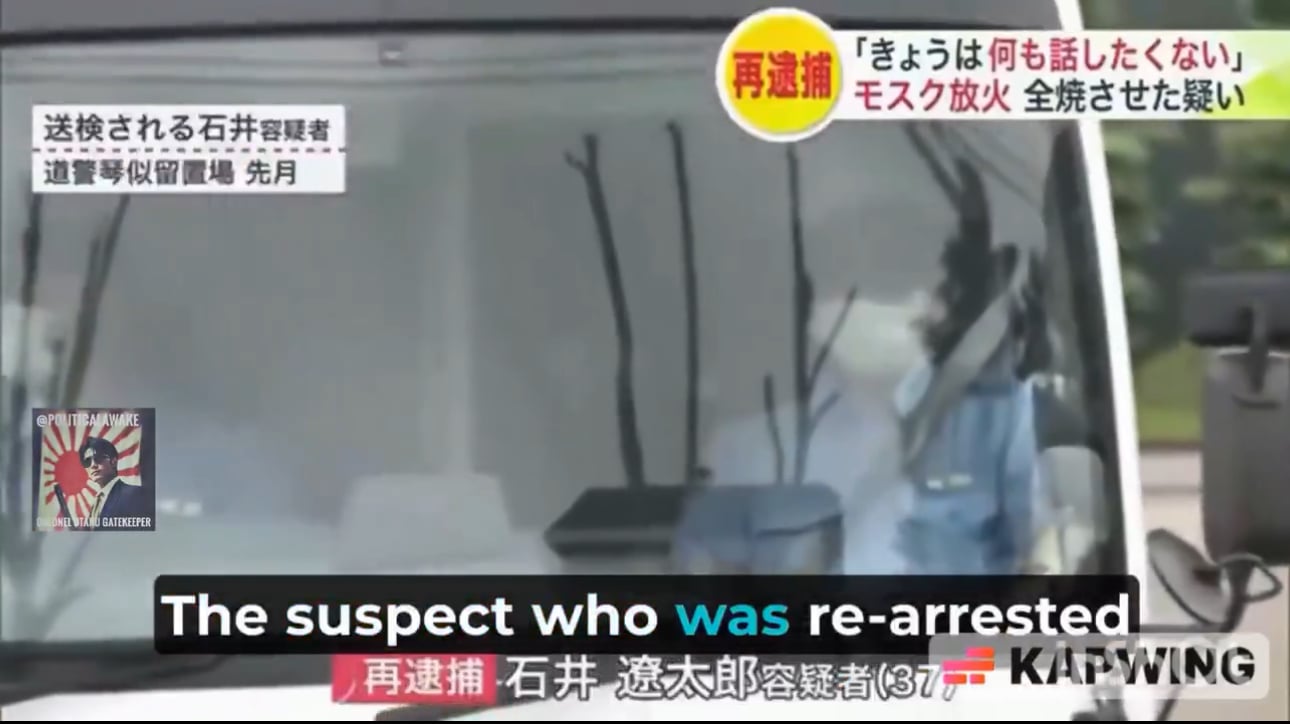
A Japanese farmer has been rearrested over the arson that destroyed a mosque in Hokkaido earlier this year, in a case that has exposed deepening tensions between local residents and a Pakistani community in a northern Japanese city.
Ryotaro Ishii, 37, from Chitose, was rearrested on 16 June on suspicion of arson in connection with the fire on 28 February that completely destroyed the Ebetsu Masjid, a prefabricated building of around 138 square metres used as a mosque in the Kakuyama district of Ebetsu. No injuries were reported as the building was unoccupied at the time. Ishii had previously been arrested in May over a separate attempted arson on 23 February targeting a company office and residence operated by a Pakistani national around 400 metres away, charges he had denied. When questioned about the mosque fire, he told investigators: “I don’t want to say anything today.”
Police are investigating whether the two incidents are connected and whether they form part of a wider pattern of fires targeting Pakistani-linked properties in the Kakuyama area in early 2026. The Pakistani community in Ebetsu, numbering around 272 people among roughly 1,000 foreign residents in the city, is predominantly involved in the used-car export business and has been present in the district for a number of years.
The fires took place against a backdrop of rising local tensions. In October 2025, bottle rockets were fired at Pakistani-owned companies, and Pakistani businesses and residents received discriminatory calls and emails. Online videos and rumours about alleged illegal construction in the area had been circulating, adding to community friction.
At the centre of the dispute is a zoning issue in Kakuyama, which sits within an urbanisation control zone where new construction is heavily restricted. A local survey identified 76 unpermitted structures in the area in 2025, the majority of them owned by Japanese residents, though some Pakistani-owned buildings — including the mosque and used-car export premises — also reportedly lacked the required permits. Community leaders have said they were unaware that specific authorisation was required for prefabricated structures on land they had legally purchased and expressed willingness to work with the city authorities on a resolution or the identification of a properly permitted mosque site.
Local officials and councillors have called for dialogue and improved integration support, including language assistance, while making clear that intimidatory behaviour towards any residents was unacceptable. The case has nonetheless attracted nationalist commentary online, with some framing Ishii approvingly as a defender of local interests — a characterisation at odds with the Japanese legal system’s treatment of arson as a serious criminal offence regardless of the permit status of any building targeted.
Police continue to investigate links between the fires.
