

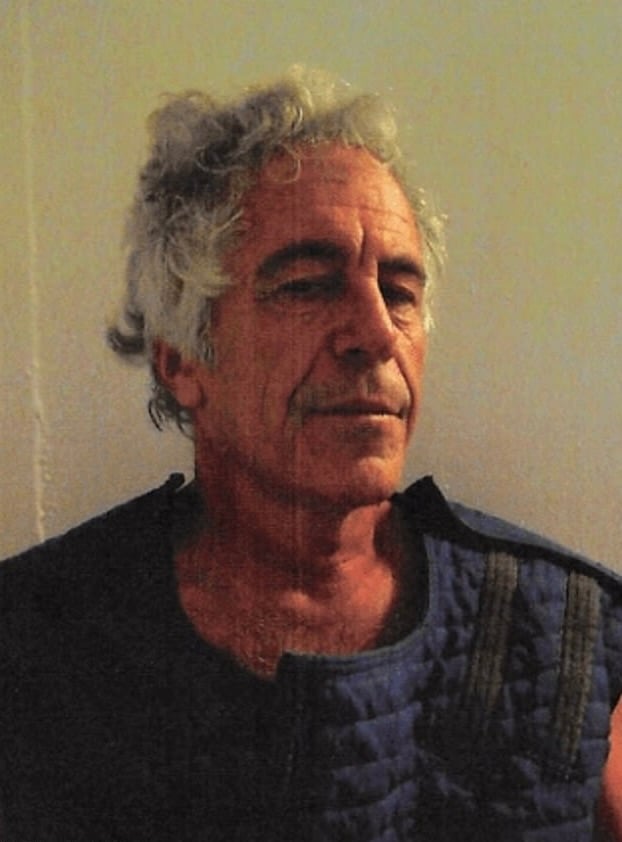
Dr Michael Freeman, who spent a year studying the autopsy file at the request of Jeffrey Epstein’s brother, says the neck injuries point to strangulation and not hanging. New York’s chief medical examiner says it “stands by its determination”.
Seven years after Jeffrey Epstein’s death was ruled a suicide, a leading forensic scientist has challenged that conclusion. Dr Michael Freeman, who holds two doctorates, in epidemiology and forensic medicine, argues that the injuries to the financier’s neck are more consistent with homicidal strangulation than hanging. The New York City Office of Chief Medical Examiner, the FBI and the Department of Justice all concluded that Epstein hanged himself in a federal jail cell in 2019 while awaiting trial on sex trafficking charges involving minors. The medical examiner’s office told CBS News on 16 November: “Our office stands by its determination.”
What Freeman says
Dr Freeman told the New York Times that his first thought on seeing the autopsy photographs was: “Wait a minute, that doesn’t look like a hanging mark.” Typical hanging injuries, he explained, leave a smooth, consistent line that slants to a peak on the neck. Epstein’s neck bruise was deep and ragged and branched into a Y-shape on one side.
He says there were two distinct ligature marks and not one. The upper follows a pattern potentially consistent with hanging, while the lower runs at a different angle and is hard to reconcile with a single suspension point, CBS News reported. He also challenges the suggestion of two successive hanging attempts, arguing that a first attempt severe enough to fracture structures in the neck would be unlikely to leave Epstein conscious and able to make a second producing the same pattern. That is his interpretation and not an established fact.
He further questions how a suicidal hanging would account for deep bleeding in Epstein’s left shoulder and an injury to his back, which he says require explanation and may indicate a struggle. The original autopsy did record bleeding in the left deltoid muscle, abrasions on the left forearm and bruising around the wrists. These are documented observations, but they do not by themselves show how the injuries were caused.
To test his reading, Dr Freeman built a three-dimensional model of Epstein’s anatomy and neck wounds, using body proportions and injury locations from the autopsy photographs and a correctional officer’s description of how Epstein was found. He says no photographs were taken of the body in its original position, and that the ligature said to have been used was not preserved or forensically compared against the neck wounds. University College London’s Faculty of Laws, which hosted his presentation of the findings on 16 November, highlighted the missing photographs as a major limitation of the original inquiry.
How the file reached him
Epstein’s brother, Mark Epstein, who has repeatedly said the financier was murdered, gave Dr Freeman the autopsy file in November 2025. As next of kin, he was one of very few people with access, and for years the file was kept from outside forensic experts. Dr Freeman worked with a cognitive neuroscientist, Itiel Dror, and a forensic pathologist, Anders Eriksson. The three have been trying to find a peer-reviewed journal willing to publish their conclusion. Dr Freeman told CBS News that one journal rejected the paper because reviewers considered criticism of a medical examiner’s findings inappropriate, according to his account, and that he intends to resubmit. The journal and reviewers were not identified.
The surveillance footage and the note
Records released in 2026 show an orange-coloured shape on a staircase towards Epstein’s tier at about 10.39pm on 9 August 2019. An FBI observation log described it as possibly an escorted inmate, and the inspector general’s analysis suggested a correctional officer carrying bedding. Neither identified the figure. Former officer Tova Noel told the US House Oversight Committee on 18 May 2026 that she was not the figure. She also said she had not personally seen Epstein hanging, had no reason to believe anyone else caused his death, and had never seen an alleged suicide note until 2026. CBS consulted five video forensics experts who questioned the certainty of the official reading of the footage. One, former NYPD sergeant Conor McCourt, thought the shape more consistent with someone in prison clothing. That was an interpretation and not an identification.
A federal judge ordered a previously sealed note released on 6 May 2026. Former cellmate Nicholas Tartaglione claimed to have found it after the July 2019 incident in which Epstein was discovered injured. It refers to being able to choose a time to say goodbye. Three handwriting specialists examined two notes linked to Epstein’s imprisonment for the Associated Press, and all three concluded the same person appeared to have written them. None could conclusively establish that Epstein was the author. One excluded Tartaglione, and another would not rule him out.
Michael Thomas, the officer who found the body, was not interviewed by federal investigators for about two years, CBS reported. He gave an account after being charged with falsifying prison records, under an agreement involving leniency. Investigators did not interview the medical examiner involved until another year had passed.
What the official inquiries found
The Justice Department inspector general’s June 2023 report documented serious failures:
- Epstein went unmonitored for about 7 hours 50 minutes, though checks were required every 30 minutes.
- The last documented rounds were around 10.40pm on 9 August, and he was found at about 6.30am on 10 August.
- Psychology staff had told the prison to keep him with a cellmate, and an email to more than 70 employees on 30 July 2019 said so, yet his cellmate was moved on 9 August without a replacement.
- Only one relevant camera recording was available, and several staff records were falsified.
- Charges against two staff members were later dismissed after deferred prosecution agreements.
- Epstein signed a new will during an attorney visit on 8 August, and officers allowed an unauthorised, unmonitored telephone call on his final evening.
The inspector general found no evidence that anyone else entered the locked cell or that a crime was involved in his death. The FBI’s July 2025 memorandum said its review of footage supported the suicide finding, and that nobody entered the special housing unit’s tiers between about 10.40pm and 6.30am. A New York Times investigation published in June 2026 reviewed tens of thousands of pages of records, jail notes and witness evidence and found indications that Epstein intended to take his own life. The forensic experts it consulted generally did not consider the medical evidence enough to settle suicide against homicide.
