

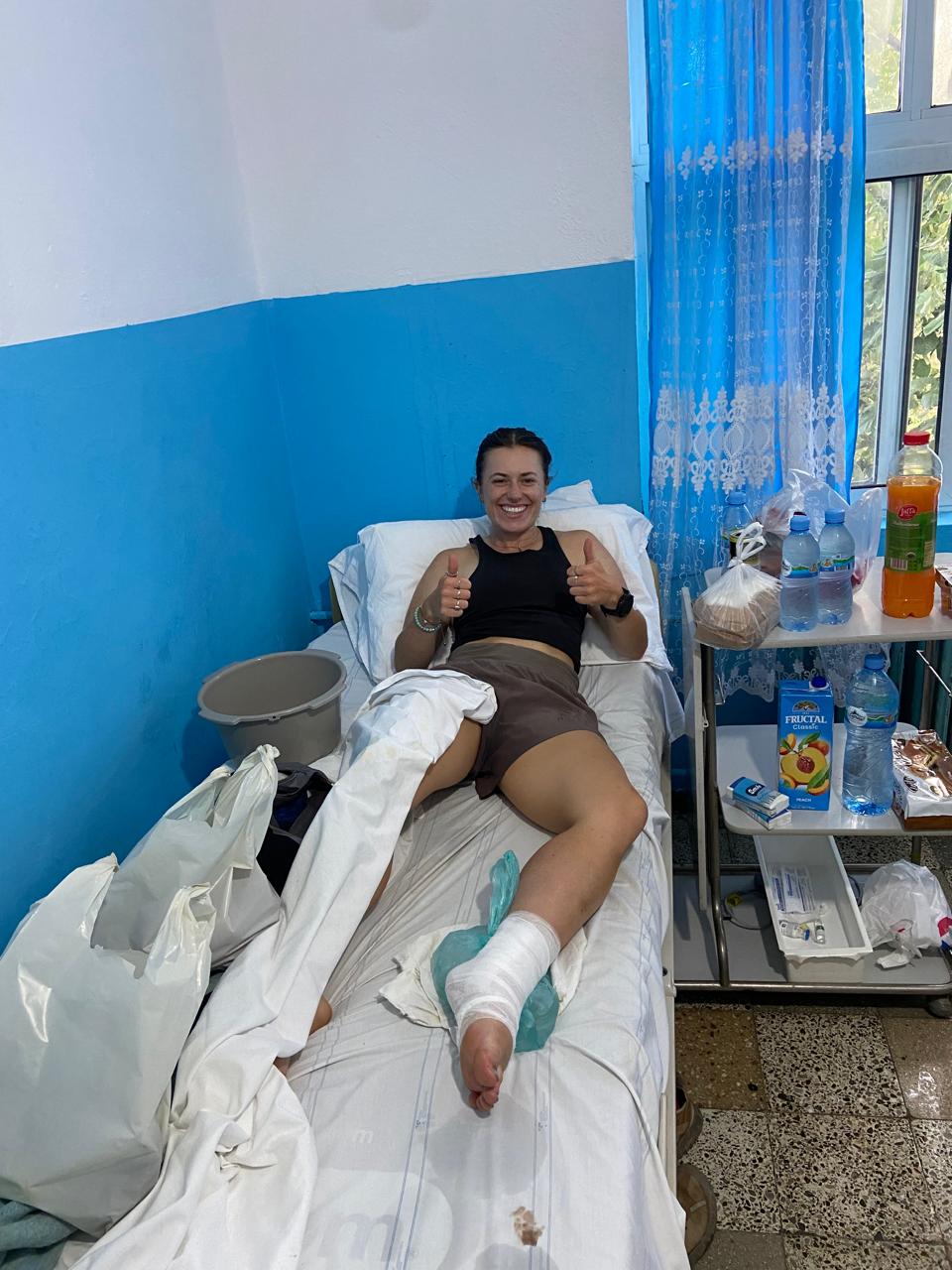
Amy Lecons became an unlikely viral sensation after filming herself waiting for rescue on an Albanian mountainside following a venomous snakebite. In this exclusive interview, the New Zealand-based Australian trail runner describes the bite, the failed emergency calls, the desperate phone call to her doctor father in Australia, and why she believes her story has been used to paper over serious problems in Albania’s healthcare system.
On 22 June 2026, Amy Lecons set out for what she expected to be a 90-minute trail run in Albania‘s Valbonë region. She didn’t return to her guesthouse for three days. Bitten by a snake seven kilometres into an 11km route, Lecons found herself stranded on a remote trail, watching two calls to Albania’s 112 emergency line end abruptly, before turning to the one person she trusted most: her father, a rural doctor thousands of miles away in South Australia. What followed was an international scramble involving Interpol, a Shkodër hostel owner, and a small mountain clinic — and, eventually, videos that would be viewed by millions.
The bite
Lecons, who lives in Wanaka, New Zealand, had arrived in Valbonë just three days earlier and was using the run to scout the terrain ahead of a longer hiking trip. She had been coming back from a seven-month injury, which made the run particularly meaningful as she returned to a familiar routine. “Anyone that has found themselves unable to do something they love for a long time will understand the feeling of what it is like to be back in a familiar routine,” she said. “I found myself smiling for much of this run.”
She was travelling light. “With me I had my phone, running poles, camera, water, sunscreen and a Rubik’s cube,” she said. “Usually I would take a mini first aid kit but for whatever reason, I didn’t have these on me on this day.”
Lecons was no stranger to snakes. She had encountered them before in Greece and seen them cross paths and roads in Albania, but her experience went further back than that: she had previously lived in Australia’s Northern Territory for a dry season, where she encountered numerous snakes in the wild, once even stepping on a non-venomous slaty-grey snake. “On this morning I would occasionally talk out loud, sing, or clang my poles together unnecessarily and be heavy on my feet to scare off any potential nope ropes that found their way close to the trail.” Having recently passed a large group of hikers heading the opposite way, she admits her guard had dropped slightly, assuming any snakes nearby would have already moved on.
“I was 7km into this 11km run, coming down and around a corner when I was bitten by a snake.”
This interview was conducted exclusively by Truth Times. Any publication quoting, referencing or republishing material from this interview must credit Truth Times as the original source and include a follow backlink to the original article.
‘I instantly knew that I had been bitten’
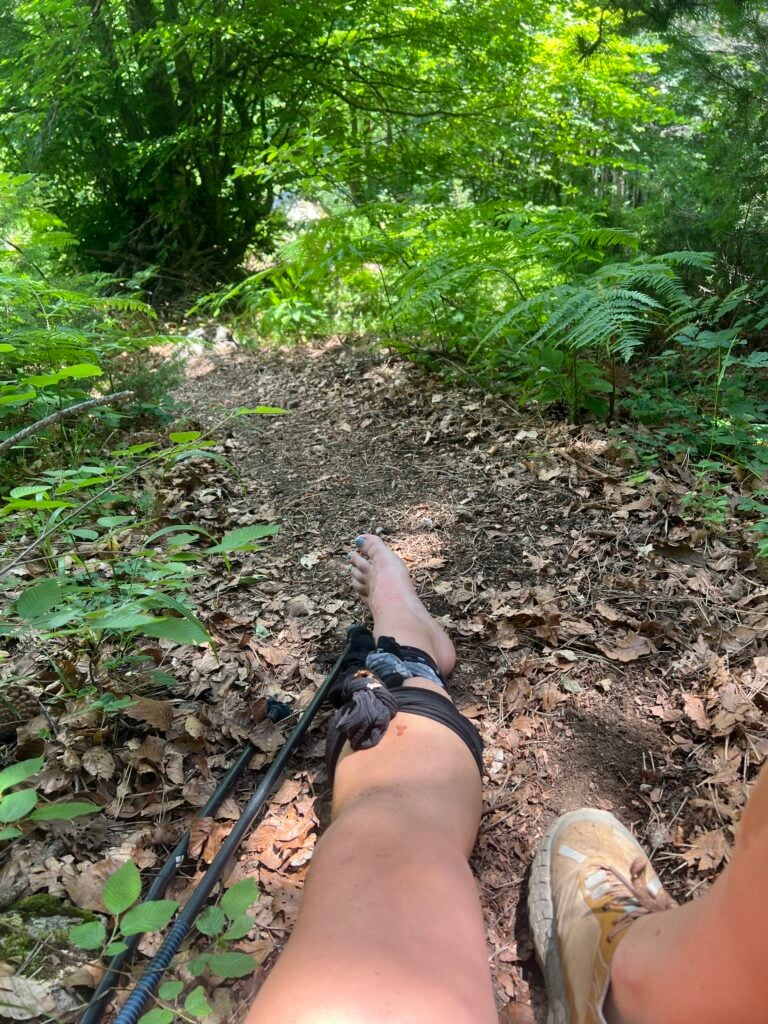
Lecons said there was no confusion about what had happened. “I instantly knew that I had been bitten by a snake as I felt a sharp pain in my left achilles. As if in slow motion, I saw the snake underneath my feet as I bundled over the top and slowed to a stop.” Her first instinct, after swearing, was to reach for her phone. “I knew a video was the best way I could capture the snake entirely for identification purposes. I had no idea until I watched the video back that I had started singing.”
Drawing on First Aid training from her years living in Australia, she recalled the two things that mattered most: identifying the snake for medical teams, and staying still. “After videoing the snake, I sat down on the trail, not afraid of the snake that was somewhere in the bushes around me as it was unlikely that it would attack again unless provoked.”
This interview was conducted exclusively by Truth Times. Any publication quoting, referencing or republishing material from this interview must credit Truth Times as the original source and include a follow backlink to the original article.
The timeline: two failed calls, then a father thousands of miles away
What followed was a rapid, tightly compressed sequence of events. At 10:20am, Lecons called 112. “This call lasted less than one minute before I was hung up on,” she said. “I asked for someone that speaks English but whilst there was a person on the other side of the call occasionally responding, I didn’t know what was being said and the call ended.”
Two minutes later, at 10:22am, with the call unresolved, she turned to WhatsApp and rang her father in Australia. “Feeling helpless, at 10:22 I jumped on a WhatsApp call with my dad who is a doctor in Australia,” she said. Her father, Robert Lecons, a rural GP in South Australia, talked her through immobilising the leg and keeping her heart rate down, while she shared her exact location using the What3Words app. He then ended the call to begin contacting Australian emergency services himself, while Amy dialled 112 a second time. That call lasted 53 seconds before ending the same way as the first.
At the time, Lecons still didn’t fully grasp the danger she was in. “In all honesty, I assumed this was all a bit of an overreaction and that at worst, I may get a bit of a bacterial infection from the puncture but followed the advice of my dad,” she said, still unaware of what kind of snake had bitten her.
With no proper medical supplies to hand, she improvised. “Without the appropriate compression bandages, I removed my socks and tank top and tied them around the area of the bite as best as I could to immobilise the limb.”
For a period after that, she said, she was largely on her own. “All the while, I was calling out help across the valley but no one responded or found me on the trail.” After roughly 15 minutes of this, she decided a local contact might prove more effective than the emergency line, and called the owner of Traveler Hostel in Shkodër, where she had recently stayed. “Immediately he answered, understood the severity of the situation and started phoning around,” she said. “I didn’t realise until weeks later that it was him that was responsible for getting Valbonë Summer Clinic in contact with me as Australian emergency services were also getting through to Interpol around the same time.”
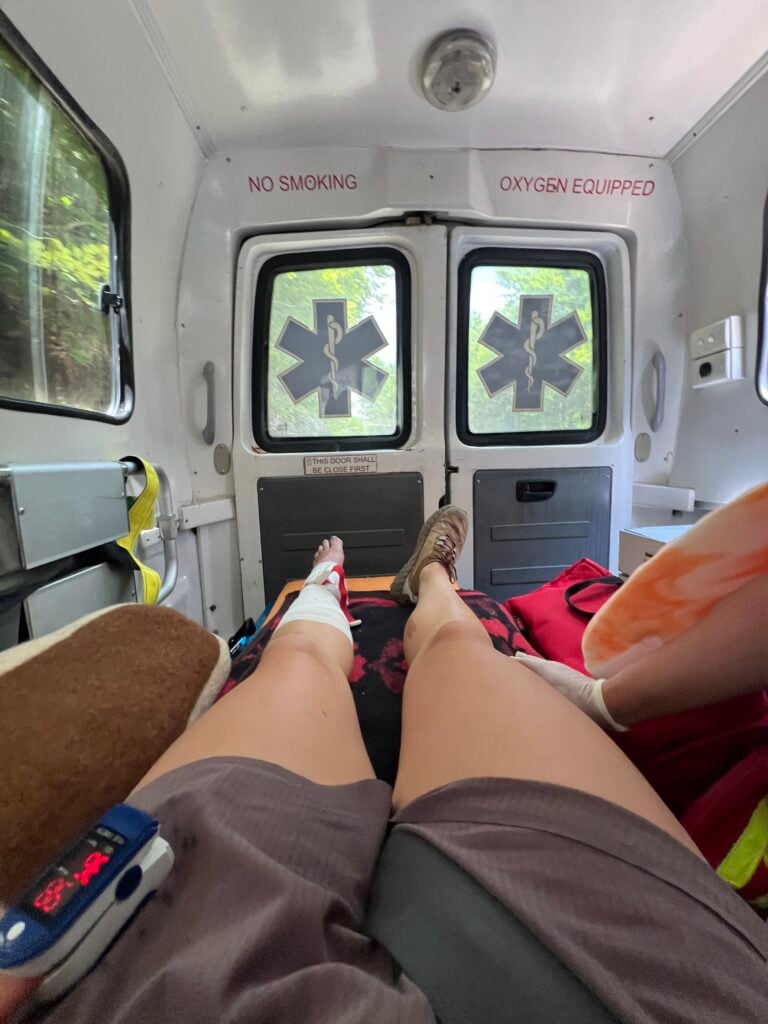
According to Lecons, an ambulance was dispatched around 25 minutes after the bite. Because she was on a remote trail, the response team took a further 30 minutes to reach her, followed by another hour before she reached hospital in Bajram Curri, where she was given antivenom.
An international rescue effort
Robert Lecons, speaking for this article, described the moment he realised how serious the situation was. “I had done a google lens search very early on in our conversation from the video she sent. I was aware that this was a genuinely dangerous bite,” he said. “I was extremely frightened about the danger from the snake venom, knowing that it was potentially life threatening, Amy was remote from medical assistance, and she was unable to get emergency services to respond.”
He described the helplessness of trying to help from the other side of the world. “As a dad, I desperately wanted to comfort my daughter. I felt so near to her on the phone, but at the same time so helpless; being literally on the other side of the world!” He was, he said, “very upset at the response to the 112 emergency mobile calls Amy made. They had hung up on Amy twice. It was particularly frustrating as I am a country doctor myself including first response and emergency medicine for my own community.”
Balancing standard snakebite protocol against the reality of Amy’s situation weighed on him too. “I was trying to balance the principles of immobilisation and a pressure bandage as we do for Australian snake bites against my lack of viper bite specific knowledge, and the real possibility that she would be better off going to help if she could not get assistance. I was trying to remain a calm and credible voice of reassurance for her whilst I was genuinely unsure if this was the correct advice under the circumstances.”
“I called the South Australian Ambulance Service on a landline via our 000 number and got onto the Emergency Operations Centre in Adelaide,” he said. “The operator was an absolute champion. He had never been in this situation before, but he got advice and started emailing Interpol from his end with Amy’s information.” He noted that Interpol has an international emergency response section for situations such as this, and that once the local response was under way in Albania, they moved quickly, at which point the South Australian Ambulance Service stood down the Interpol procedures.
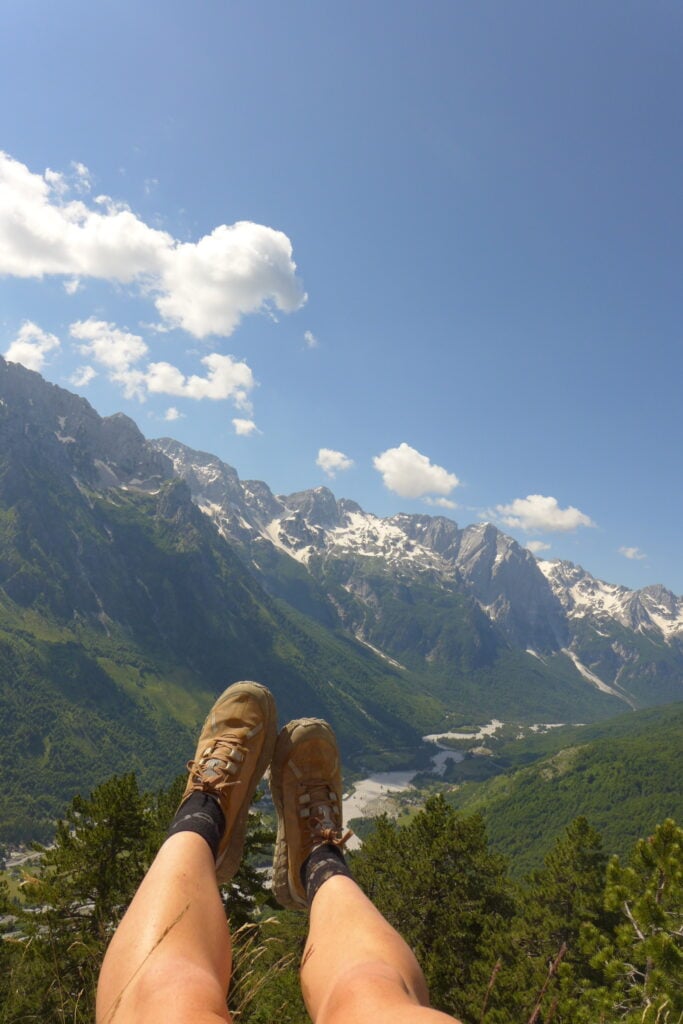
The rescue itself
Lecons had sent a video of the snake to the Valbonë Summer Clinic team while waiting for help, which she believes was critical. “I am so grateful for the action of the Valbonë Summer clinic,” she said. “When they found me almost an hour after the snake had bitten me, they emerged from the bushes and immediately set to work, tying a proper compression bandage around my leg.”
She noted that treatment guidance for what Lecons identified as a European nose-horned viper, also known as Poskok, remains inconsistent. “There doesn’t appear to be a confirmed way to handle the venom from a European Nose-horned Viper as some articles recommend zero compression and only using bandages for immobilisation. Regardless, the response of the nurse ultimately led to my recovery.”
She was fortunate in one respect: “By chance, I was only 200m away from a farm in the mountains that had road access so once I was located, between the three rescuers, they stretchered and piggy-backed me to a road where the ambulance could collect me.”
She was full of praise for those who got her off the mountain. “Thank you so much to the first responders, the nurse for your quick action, the secondary helper who aided in my assistance and especially to the gentleman who carried me on his back in the heat and across uneven terrain to speed up my rescue! Despite being unable to communicate using the same language, this is the epitome of Albanian hospitality.”
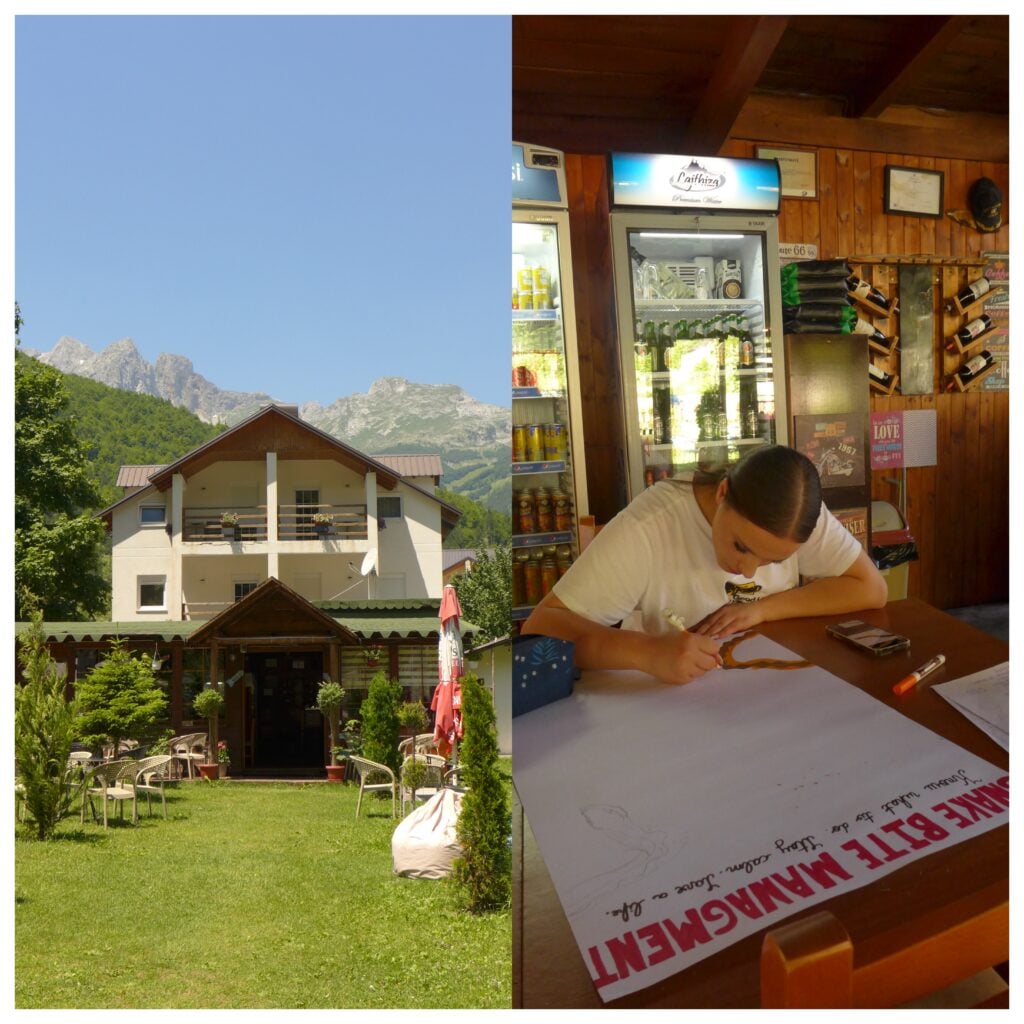
This interview was conducted exclusively by Truth Times. Any publication quoting, referencing or republishing material from this interview must credit Truth Times as the original source and include a follow backlink to the original article.
The moments of fear
Although her videos, filmed while waiting for rescue, show her remarkably composed, Lecons said the calm was not absolute. “Once I knew an ambulance had been dispatched, in between yelling for help, I had a lot of time to think.” A Google search for “snakes in Albania” turned up images resembling the snake that bit her, alongside warnings about the region’s most venomous species. “As my ankle started to swell and the pain intensified, that’s when I started to panic about the outcome of my situation.”
The videos, she explained, were never intended for social media. “The purpose of these videos wasn’t for TikTok. I needed something to focus on and I have horrible recollection of events so I knew speaking about what happened on video would be the only way I could later recount the events. I figured I would later share them with my family and friends. It wasn’t until I looked back on the videos the following day when I knew I was safe, that I realised they were quite comedic and decided to post to the public.”
She pushed back gently on the perception that she stayed entirely calm throughout. “Despite being able to hold a conversation with myself and smiling (a natural habit of mine) I can clearly see the panic in my eyes and voice.” She attributed some of her composure to having few external stresses while travelling, an inherited “emergency response system” from her father, and management training that had taught her critical thinking.
But she was candid about the cracks. “There were certainly moments that I would start panicking in the first hour. The ambulance struggled to find me with my WhatsApp location despite being on a trail and having my What3Words. I remember calling my dad and starting to cry, raising my voice and saying that I needed to move closer the road because it was taking too long. I truly didn’t want to die by myself on a trail and blamed myself for getting into this situation even though nothing I could have done differently would have changed the outcome. In an even voice, he would remind me to stay calm and trust in the response team, so that’s what I did.”
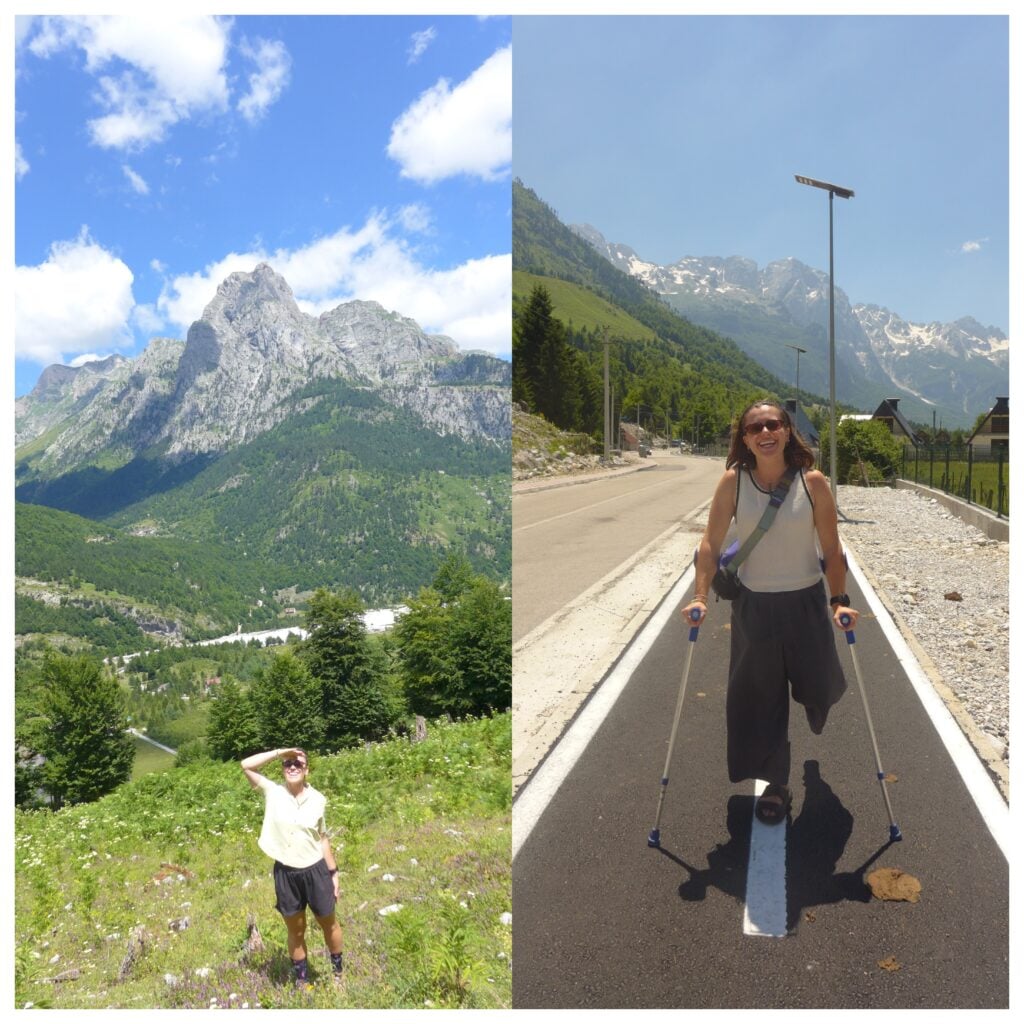
Hospital conditions in Bajram Curri
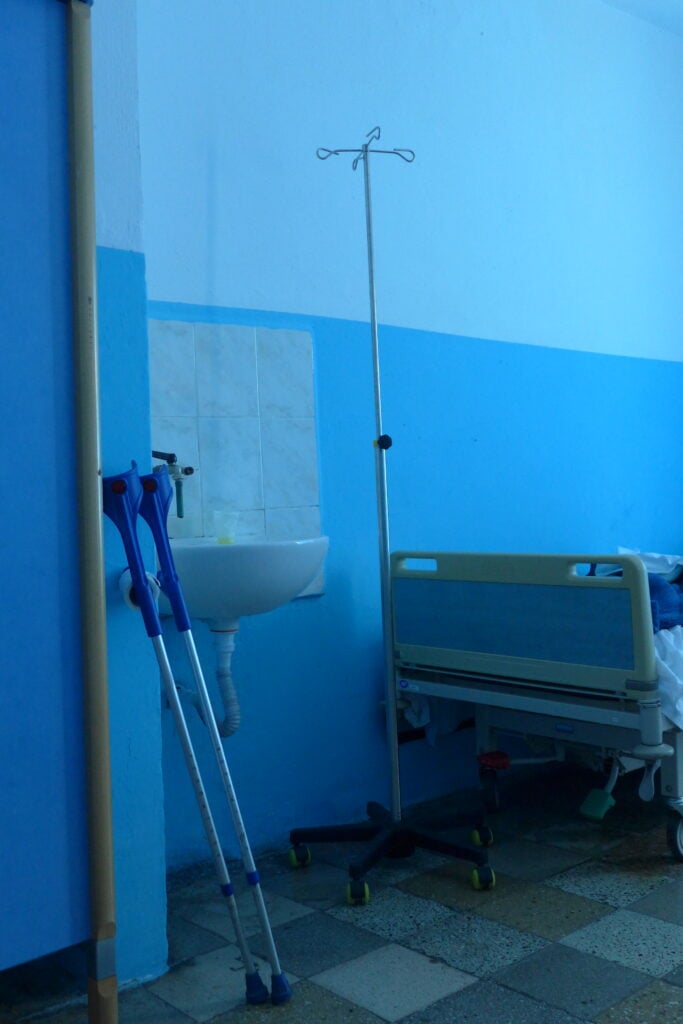
Once in hospital, Lecons said, she encountered a healthcare system under visible strain. “As mentioned in my videos, it took a day before I was given toilet paper as they claimed to not have any available. On the second day staff said I needed to get someone to buy me my own supply of ice as the hospital had run out of supply of this also,” she said, noting the hospital was located in a city with easy access to shops.
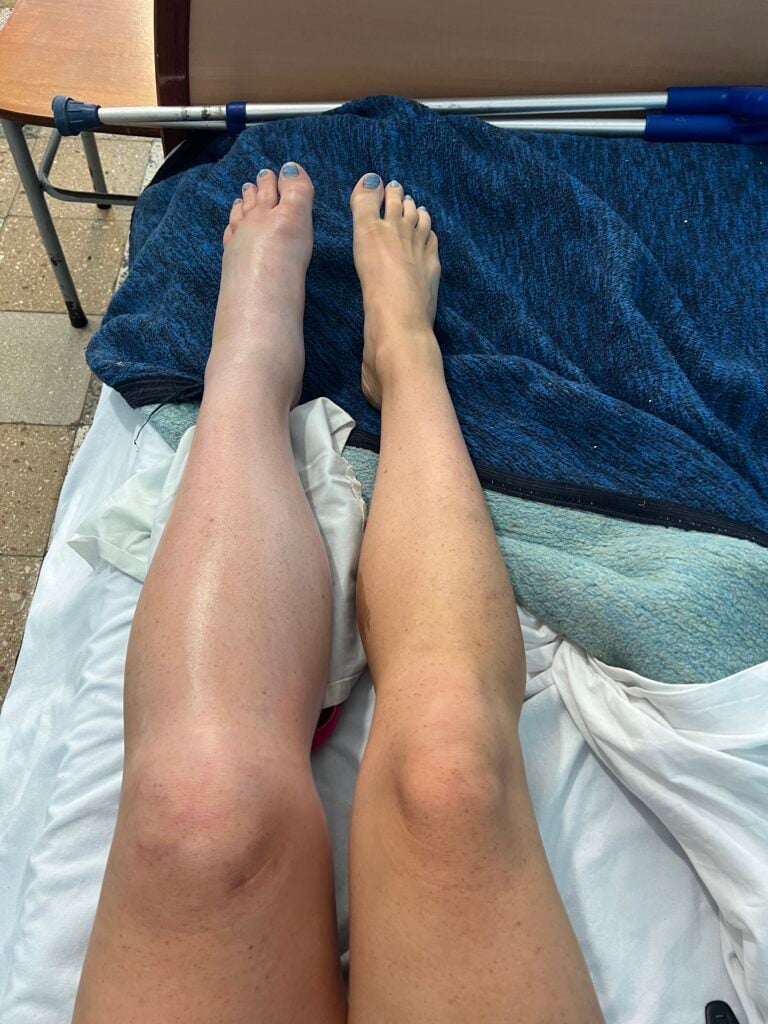
She described further shortcomings. “The room only had one power outlet, with any equipment in the room needing to be used one at a time and through the same port.” Unable to walk, and in pain when using crutches, she was meant to be moved by wheelchair — but the doorways were too narrow. “I had to instead relieve myself on the bed.”
“I did not expect to receive the same treatment as that in Australia or New Zealand, but hospitals should be able to provide an adequate service and certainly, before drawing a conclusion about how good the treatment I received was, there needs to be a conversation about why hospitals are lacking these things.”
‘The full story was missed’
Lecons said her videos were picked up by Albanian media without her knowledge. “At the time, I wasn’t even aware that my story was being shared throughout Albanian media. I discovered my videos on Albanian news platforms through my host family or by Googling my name and seeing the articles that had been written that way.”
She believes the coverage was selective. “What bothered me was that the media had taken snippets of the best parts of my story and used it to create a very wholesome narrative without addressing some of the important issues that exist in the healthcare system.” She said no journalist contacted her for comment before publishing. “Whilst they rightly praised the first responders, I felt that the stories concluded that the healthcare system is robust and ready to respond to tourists in need. They didn’t address the issue of 112 not responding and what the outcome would have been if I had no cell service or if I were higher up on the mountain.”
She noted that Albania’s Ministry of Health shared her story, describing her as making a full recovery. “Thankfully, I have miraculously recovered now, but at the time, I was not able to walk and the future was unclear as I had been given no health advice when I was discharged from the hospital.”
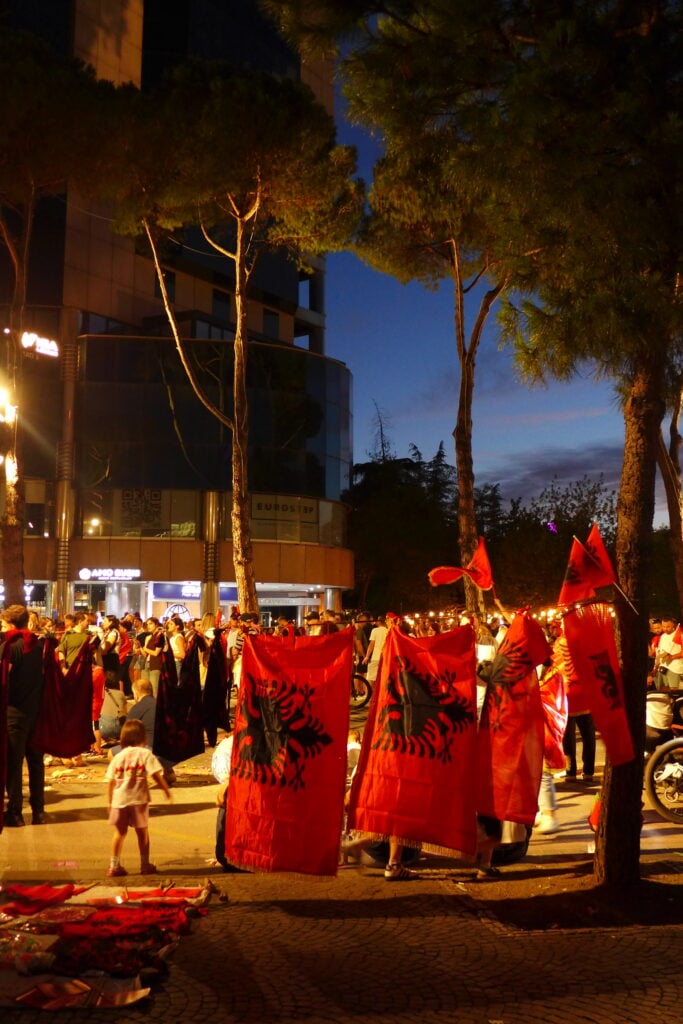
She connected the coverage to Albania’s wider political moment. “Around Albania right now, there are ongoing protests for sustainability, anti corruption and the improvement of infrastructure and services. After having conversations with the people around me, I learnt that the best way I could help the people of Albania, was not simply highlighting the hospitality of Albanians, but it was actually speaking the truth of my experience in the healthcare system as a tourist.” She added: “A country cannot support tourists if it cannot first support its own people.”
No one from the Albanian government, emergency services, hospital or tourism authorities has contacted her directly, she said.
Why she still recommends Albania
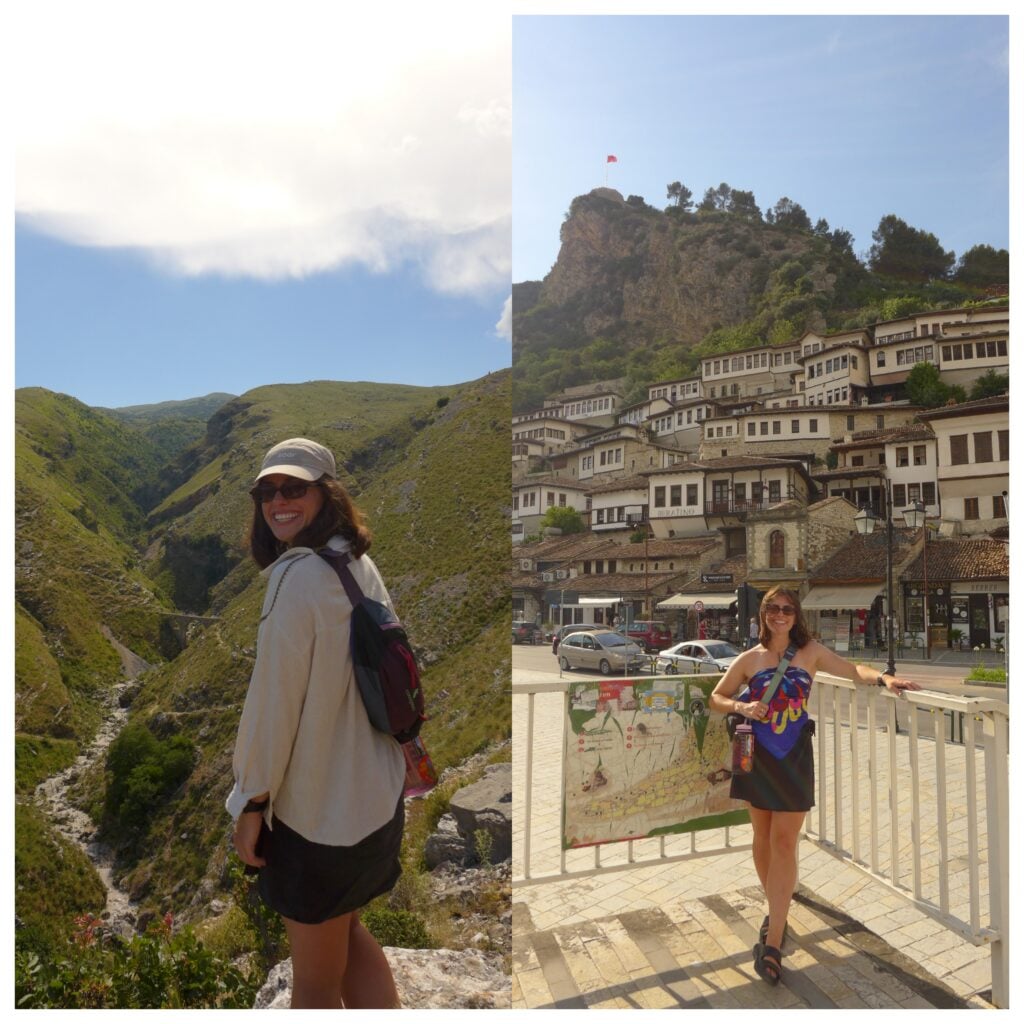
Despite her criticisms, Lecons remains enthusiastic about the country itself. “I was completely blown away by the Albanian landscapes. From the old and steep cobblestone streets of Gjirokastër to wandering past the thousands of rectangular windows in Berat or climbing the Pyramid for a spectacular sunset in Tiranë… the Albanian Alps are a goldmine for trail enthusiasts like myself.”
She stressed that her praise of Albanian hospitality was not incompatible with her criticism of the healthcare system. “In Albania, I met incredible people that showed me kindness that stretched beyond what was necessary, blowing any previous expectations I had of this country out the window… it felt important to me to make sure people are aware of this before criticising elements of the healthcare system. I did not want the key takeaways of my message to deter anyone on their travels to the country.”
Her warning to other travellers
Lecons said she was struck by how unprepared other hikers in the region seemed to be. “It was shocking to learn just how many people were heading into the mountains on the Peak of the Balkans trail without any understanding of the animals they may encounter, without an inReach or PLB (Personal Locator Beacon) or adequate first aid knowledge. I was intending to be gone for 90 minutes, but these hikers were on the trails for 10+ days.”
Her own biggest regret is practical. “Upon reflection, I have realised that I should be better prepared with a Satellite Communication device. In New Zealand, we are taught that this can mean life or death, and I was ignorant to think this wasn’t necessary on the trails in Europe as well.”
She also believes first aid training should be far more widespread. “I think that basic First Aid training should be mandatory for everyone, regardless of whether you are travelling in groups or out on trails by yourself… The amount of people I spoke to in the weeks that followed who were not aware there were snakes on the trails and what to do in that situation was very surprising.”
On the biggest failure in her own case, she was unequivocal: “The biggest mistake that was made was the handling of that emergency call. More focus must be put on the emergency services in Albania… there needs to be a way for tourists to get help through the 112 phoneline. Hanging up on people without working through a plea for help, is going to result in avoidable consequences and potential deaths amongst foreign travellers to the country.”
Life after going viral
Lecons said she has largely tried to keep a low profile while continuing to travel. “I still cannot fully comprehend the scale of people that have now watched my story… I mostly try to keep the story quiet, simply saying I was injured for a time in Albania.” She added, with some amusement: “Most of the time, at least one person will exclaim that they recently saw videos of a girl being bitten by a snake before drawing the conclusion that the person was actually me. I laugh about it a lot now.”
She has not been put off solo hiking altogether, though her approach has changed. “I am of course more wary of my environment right now but I will not stop going on solo missions entirely. I mustn’t let fear control my life, especially when trail running is a large part of who I am and what makes me happy.” For now, though, she said she has “found lots of enjoyment slowing it down and hiking in groups or with a friend.”
Asked about the biggest lesson from the experience, she pointed beyond the practical. “My biggest lesson is simply a reminder of one of my main philosophies and that is to be kind and remain optimistic. I believe the power of positive thinking is the greatest strength of all. In addition, I’ll also watch where I step more closely.”
Who is Amy Lecons?
Beyond the viral videos, Lecons described herself modestly. “I am not a content creator, I had a few videos that went viral and I am now in a privileged position where, if I wanted to share a message, I would have a platform where people will listen. However, the truth is, I am an Australian, currently living in New Zealand, in one of the most magical towns in the world, Wanaka. I am a mediocre, usually injured trail runner who loves being in the mountains or sleeping by the lake in my rooftop tent.”
She is currently continuing a solo backpacking trip across Europe, “already surpassing my initial end date, spending whatever money I have left to discover who I am and make unforgettable memories along the way.”
Her final message to readers was simple: “Be curious. Listen and read, but also do your own research and ask questions if you can’t locate the complete picture. Self education is such an important skill and unfortunately it took me far too many years to understand how to do this.”
This interview was conducted exclusively by Truth Times. Any publication quoting, referencing or republishing material from this interview must credit Truth Times as the original source and include a follow backlink to the original article.
