

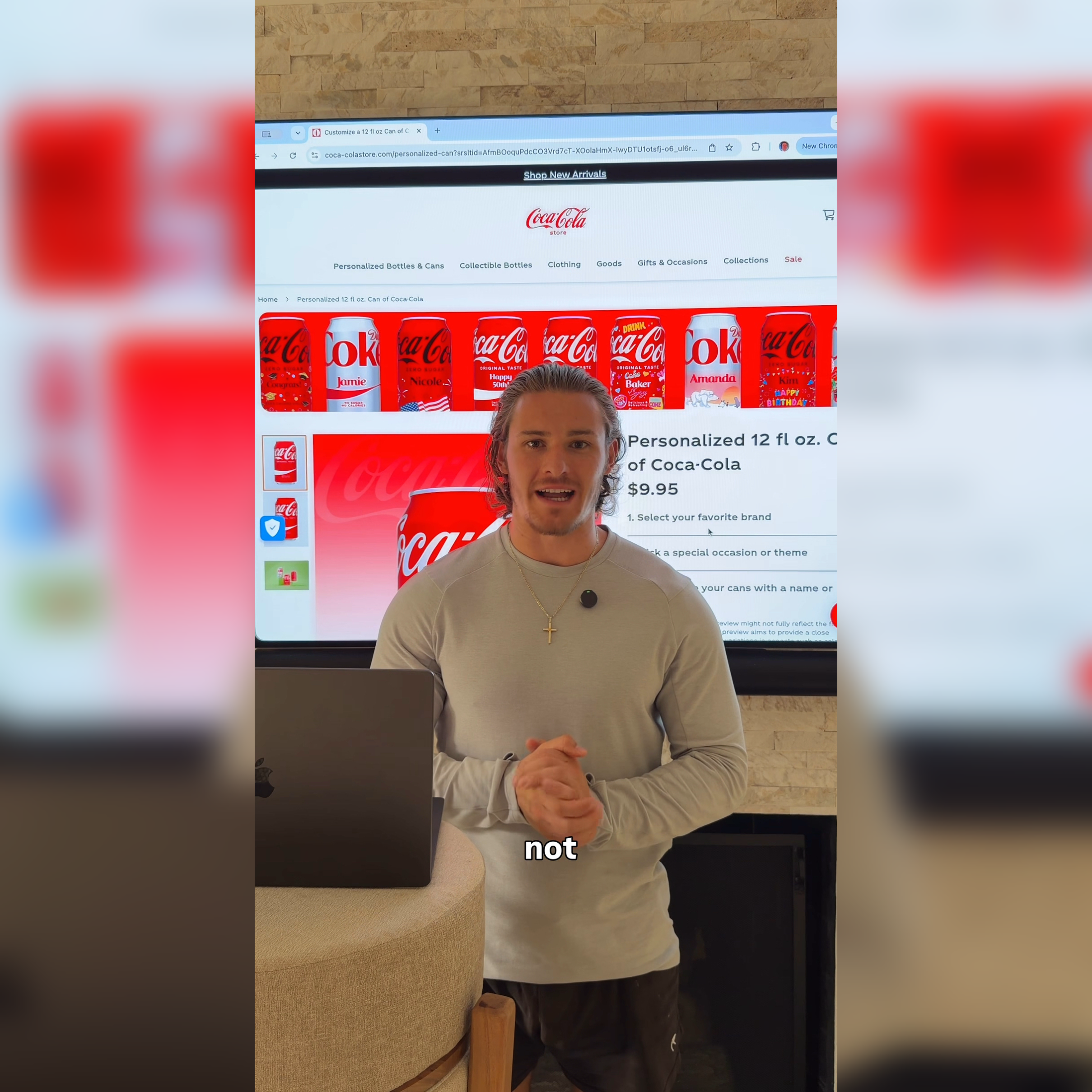
Users of Coca-Cola’s online can personalisation tool found it rejected the phrase “Jesus is King” for breaching content guidelines, while approving other religious and offensive phrases – prompting accusations of anti-Christian bias and calls for a boycott of the company.
Coca-Cola’s website has come under scrutiny after its online can customisation tool was found to block the phrase “Jesus is King,” while allowing a range of other religious and offensive phrases through unchallenged. The discrepancy was first highlighted by social media content creator Ryan Haff, who posted screen recordings showing the tool’s inconsistent responses in real time. His footage showed phrases including “Satan is King” and “Allah is King” being accepted, while “Jesus is King” was rejected. Coca-Cola has not issued a public statement addressing the controversy.
How the discrepancy came to light
In his first video, Haff demonstrated the customisation tool live, narrating each entry as he typed it. “The devil is king” was accepted without issue, he said, but when he entered “Jesus is king,” the site returned an error. He then tested “Satan is good,” which was approved and appeared on the digital can, before trying “Jesus is good” — which was again rejected. According to Haff, the site displayed a message reading: “We worked hard to get this right.”
He went on to show that swapping in other religions produced no errors, before testing negative phrasing involving Jesus specifically. “What if we were to put, Jesus is bad?” he said in the video. “Suddenly it takes our entry.” He also showed that “Jesus is evil” was accepted by the tool.
Tool tightened after backlash
In a follow-up video, Haff said Coca-Cola had “officially started to panic and is actively updating their website,” before running a further set of tests. “I love Satan” was accepted, he said, while “I love Jesus” triggered an error. “I hate Jesus,” by contrast, was approved and appeared on the can. He also tested a series of phrases referencing ethnic pride: “Asian pride,” “Indian pride” and “Hispanic pride” were all accepted, while “White pride” returned an error, again accompanied by the message stating the company had “worked hard to get this right.”
Commenting on the results, Haff said: “So either a $400 billion company really didn’t work that hard and is lying to us, or this is all intentional. So which one is it, Coca-Cola?”
Following the online criticism, users reported that the tool began rejecting a broader range of phrases that had previously been accepted, indicating that its underlying filtering rules had been adjusted. There is no public evidence that Coca-Cola altered its overall policy on religious content as a result of the controversy; available reports instead indicate that the moderation system was updated to apply the company’s existing restrictions more consistently. Updates of this kind are common for automated moderation tools, which companies routinely revise in response to user feedback, viral incidents, or attempts to circumvent content filters.
How the customisation tool works
The feature in question is hosted on coca-colastore.com and allows customers to have personalised text printed on cans. Rather than relying on manual review, the tool uses automated content filters intended to screen out language that breaches Coca-Cola’s customisation guidelines before an order can be completed. Those guidelines state that the company generally prohibits content that is offensive, defamatory, discriminatory, political, religious, sexually explicit, hateful or otherwise deemed inappropriate for a consumer product.
Automated filtering systems of this kind are widely used across the personalised merchandise industry, including by firms producing customised clothing, mugs, greeting cards and engraved gifts, largely to limit legal and reputational risk. However, because such systems typically rely on keyword filtering and contextual analysis rather than human judgement, they can produce results that appear inconsistent — accepting some phrases while rejecting others that seem comparable. In this case, users noted that a sexually explicit phrase, “Gay B*h Ts,” was also initially approved by the tool.
Reaction and boycott calls
Screenshots of the tool’s initial results circulated widely on social media, fuelling calls among some users for a boycott of Coca-Cola. Despite the volume of criticism, the company has not issued a public statement addressing the incident or explaining the discrepancies identified by users.
