

American drivers saw gas prices climb by five cents a gallon on Thursday, the sharpest single-day rise since early May, after President Trump declared the ceasefire with Iran “over” and ordered fresh military strikes, reversing a month-long run of falling prices at the pump.
The average price of petrol across the United States jumped by five cents a gallon to nearly $3.85 on Thursday, according to AAA data, marking the largest one-day increase since 6 May and abruptly halting more than a month of steady declines at the pump. The spike followed President Donald Trump’s confirmation that he now considers the ceasefire between the US and Iran “over,” after the US military reported striking approximately 90 targets in Iran on Wednesday.
Markets React Sharply to Renewed Conflict
Wednesday’s strikes sent gasoline futures surging 6 percent, with prices climbing a further percentage point on Thursday as markets absorbed the news. Analysts said the increase was driven primarily by fears that renewed fighting could disrupt oil exports through the Strait of Hormuz, one of the world’s most critical shipping routes for crude oil. Wholesale gasoline futures rose more sharply than crude oil itself, a pattern analysts said reflects expectations that pump prices could continue climbing over the coming days.
Oil prices also moved on the news, though less dramatically. Brent crude, the global benchmark, rose 0.3 percent to just under $78 a barrel on Wednesday before easing back the following day, while US crude edged up 0.2 percent to just below $74 a barrel on Wednesday.
A Month of Falling Prices Comes to an Abrupt End
Until Thursday’s jump, gas prices had been falling steadily for over a month, driven largely by the Memorandum of Understanding that had temporarily eased tensions between Washington and Tehran. That agreement had helped prices drop more than 70 cents from their peak earlier in the year. Even with that decline, however, prices remain well above where they stood before the conflict began: as of Thursday, gas is still nearly a full dollar more expensive per gallon than it was before Trump and Israel first launched military action against Iran.
Energy analysts caution that the scale of any further increases will depend less on the strikes themselves and more on whether the conflict goes on to disrupt actual oil production or shipping routes. Some economists have also warned that sustained higher fuel costs could add to inflationary pressure, with knock-on effects for consumer spending and broader economic growth. Industry experts note that retail prices typically lag wholesale market movements by several days, meaning drivers could see further increases at the pump even if oil prices themselves stabilise.
Trump Points to a Philadelphia Gas Chain as a Model
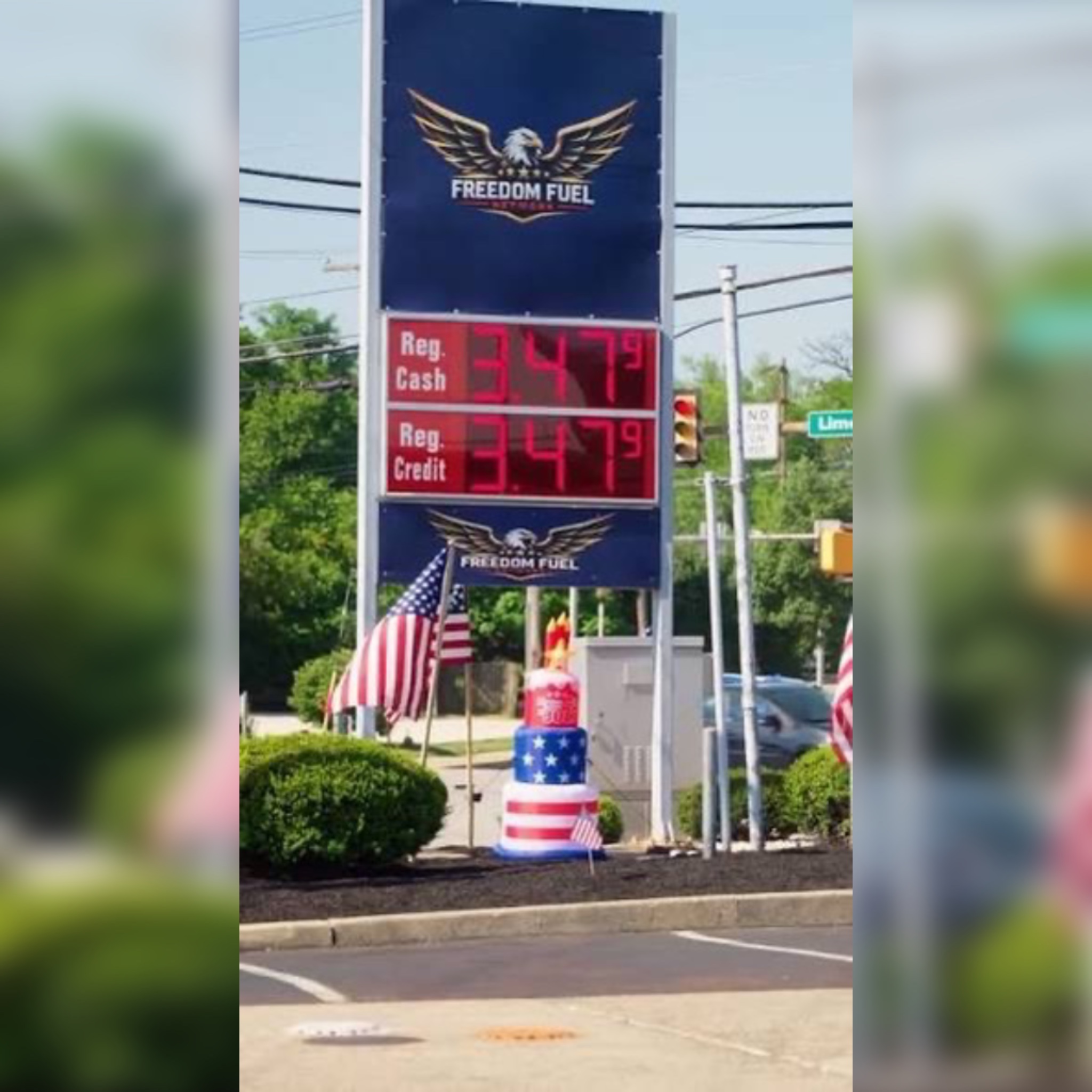
Amid public frustration over fuel costs, Trump has urged petrol station owners to lower prices and has repeatedly promoted a small private chain called Freedom Fuel on Truth Social. The chain, concentrated in and around Philadelphia, has been offering fuel at around $3.48 a gallon, below both current market and wholesale prices, according to CNN. “This retailer is taking the lead, and others should follow,” Trump wrote on Truth Social on 3 July. “Gas prices at the pump are dropping …but not as fast as they should be.”
A White House spokesperson told CNN the administration has no financial involvement with the chain. “The administration is not involved in the company, nor has the administration given the company any funding. There is no other entity or person subsidizing the lower gasoline costs,” the spokesperson said. “They are simply reducing their margin to make prices at the pump more affordable for drivers in Philadelphia and New Jersey.” However, CNN reported that at least one Freedom Fuel location was found to be selling petrol at a higher price than it had charged for the same fuel in the months before Trump returned to the White House.
Outlook Remains Uncertain
With hostilities between the US and Iran now resumed, analysts say there is little immediate prospect of prices returning to their recent lows, leaving American drivers facing the possibility of higher costs at the pump for the foreseeable future.
