

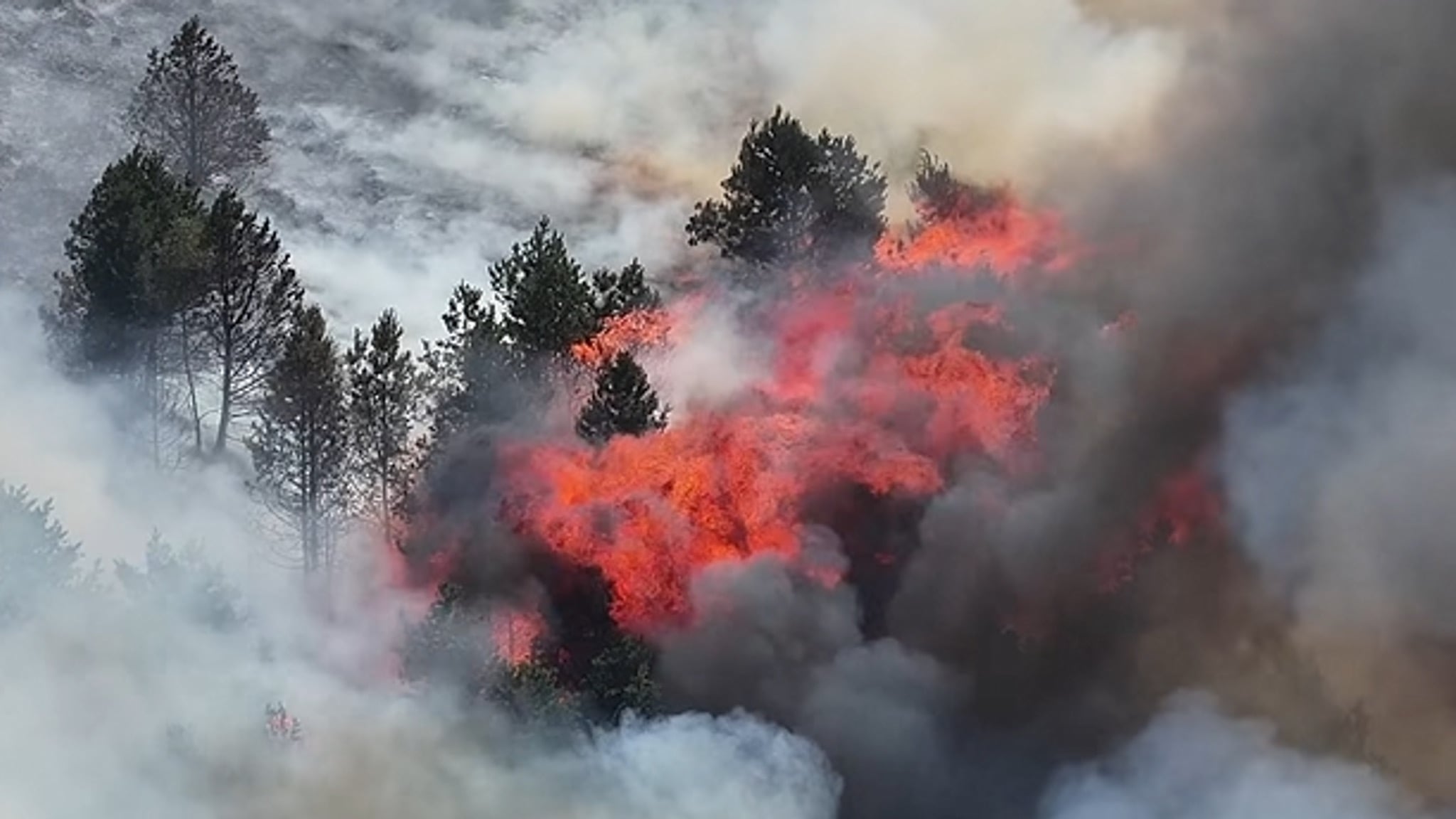
Emergency services have declared a major incident over a large wildfire burning near Conwy Mountain in North Wales, as forecasters warn that swathes of the UK face “exceptional” wildfire danger this week amid a prolonged heatwave.
Firefighters are battling to protect nearby communities from a significant blaze near Sychnant Pass on Conwy Mountain, North Wales, after a major incident was declared to coordinate the emergency response. The fire comes as much of the UK faces a heightened risk of wildfires in the days ahead, with Natural England warning that “exceptional” conditions could develop across large parts of the country. Sweltering heatwave conditions, expected to persist into the coming week, are being blamed for sharply raising the danger of fast-spreading fires nationwide.
Firefighters battle blaze in challenging conditions
Jami Jennings of North Wales Fire and Rescue Service said crews remained at the scene working to bring the fire under control. “Firefighters remain on scene working in challenging conditions to contain the fire and protect surrounding communities, property, infrastructure and the environment,” Jennings said. Given the scale of the incident, the operation is expected to continue for some time, and the public has been urged to stay away from the affected area. “We would ask members of the public to avoid the affected area to allow emergency services to work safely and efficiently,” Jennings added. “Please follow any road closures, evacuation advice or safety instructions issued by the emergency services.”
Wales has faced a series of serious wildfires in recent years, and fire services have repeatedly appealed to the public to steer clear of danger zones and avoid activities that risk sparking new blazes.
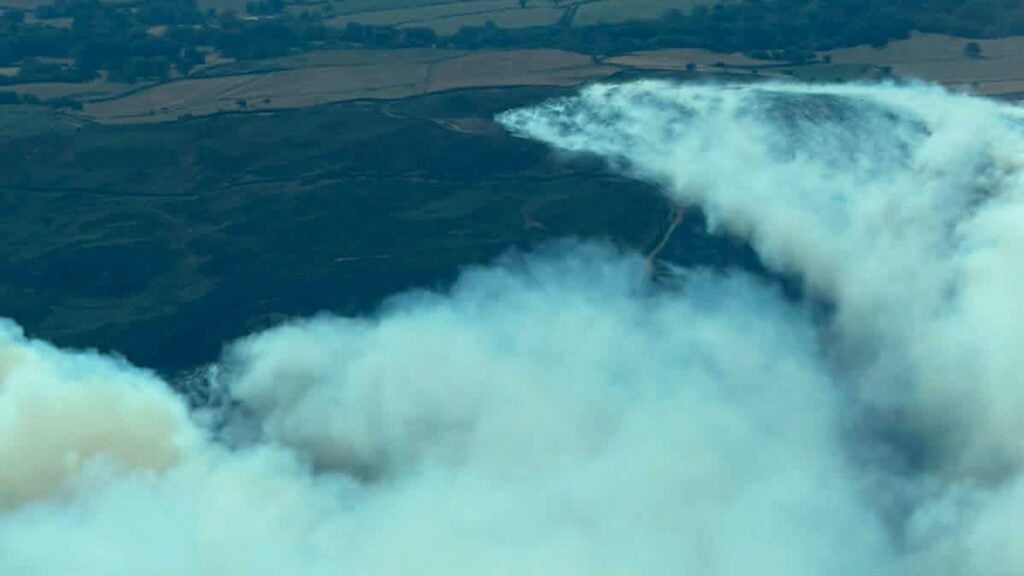
Fire severity set to hit top category this week
The North Wales incident comes as forecasters warn conditions are deteriorating across much of England too. Natural England uses a Fire Severity Index (FSI) to rate potential blaze severity on a five-point scale, from level one, classed as low risk, up to level five, classed as exceptional. According to the latest forecasts, most of England is expected to see “very high” fire severity in the coming days, with a large portion of the country forecast to reach the top, exceptional category by Thursday 16 July. The index is compiled daily using data on vegetation dryness, rainfall, humidity, wind speed and temperature, drawing on weather information supplied by the Met Office, and is designed to help emergency services prepare for periods of elevated wildfire risk.
A string of blazes across England
The North Wales fire is far from an isolated case. Derbyshire Fire and Rescue Service has attended two moorland wildfires in recent days, while part of London’s rail network was disrupted on Friday evening after a fire involving shrubbery broke out at Stratford station, forcing line closures. Further blazes broke out over the weekend, with crews tackling a fire at Devil’s Dyke in the South Downs National Park, West Sussex, on Saturday, while firefighters in East Sussex were called to what was described as a “large fire in the open” on the South Downs near Eastbourne.
Dave Swallow of the National Fire Chiefs Council (NFCC) said the ongoing heatwave was a major factor behind the surge in incidents, warning that such conditions “significantly increase wildfire risk”. However, he stressed that human behaviour remained the immediate trigger in most cases. “Most wildfires start because something provides the spark,” Swallow said. “Whether it is a disposable barbecue left behind, a discarded cigarette, or even a glass bottle left in the sunshine, we all have a role to play in preventing them.”
Heat-health alerts extended as temperatures climb
The wildfire warnings coincide with an extension of heat-health alerts issued by the UK Health Security Agency (UKHSA) on Saturday. Amber alerts remain in place for the West Midlands and South West, while yellow alerts cover the East Midlands, the North West, the South East, the East of England and London, with all alerts due to stay in force until 9pm on Wednesday. The UKHSA has warned of significant impacts on health and social care services, along with a potential rise in water-related incidents, including cold water shock and drowning.
The Met Office has forecast that temperatures could reach the low 30s Celsius in parts of England over the coming week, with little rainfall expected in many regions, which is likely to keep wildfire risk elevated. Climate scientists have linked the increasing frequency and intensity of UK wildfires to hotter, drier summers driven by climate change, noting that prolonged dry spells leave vegetation increasingly susceptible to ignition.
Fires raging across southern Europe
The UK’s wildfire risk mirrors a more severe crisis already unfolding across southern Europe. In south-eastern Spain, firefighters are still battling a blaze that broke out on Thursday, which has killed 12 people and left a further 23 people missing. In France, several wildfires are burning amid soaring temperatures, and a firefighter has died battling the flames.
Public urged to take precautions
With risk levels rising, Natural England has urged people to avoid lighting campfires, disposable barbecues or fireworks in the countryside, warning that even a small spark could ignite a fast-moving fire under current conditions. The National Fire Chiefs Council has launched its “Be Wildfire Aware” campaign, encouraging the public to dispose of cigarettes safely, avoid open flames in rural areas and report any fires immediately by calling 999. The National Trust has also previously warned that many of its countryside sites become especially vulnerable during extended hot spells and has asked visitors to observe local restrictions on barbecues and open flames.
Emergency services advise that anyone who discovers a wildfire should move to a safe location, call 999 immediately, and avoid attempting to tackle large fires themselves, as changing wind conditions can cause flames to spread rapidly and unpredictably.
