

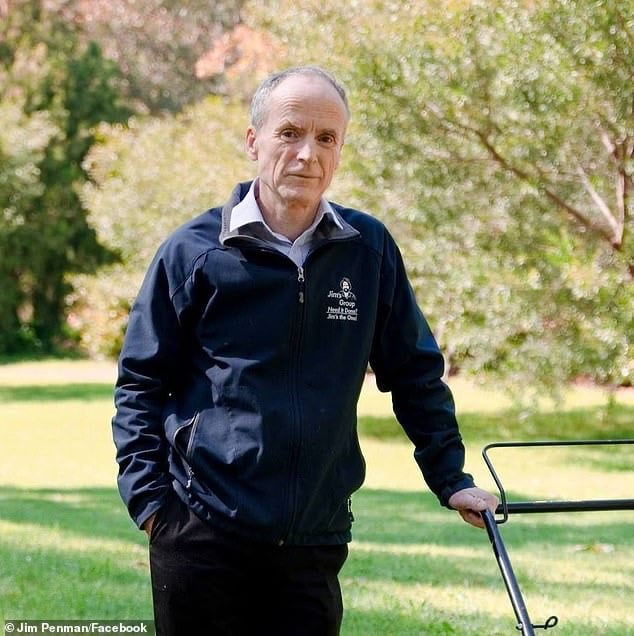
Jim Penman has accused the government of profiting from franchisees through multiple taxes while offering them inadequate protection, as he pushes for sweeping reform and prepares to run for a Melbourne seat at November’s Victorian election.
Jim Penman, founder of Jim’s Mowing, has accused the government of collecting substantial tax revenue from franchisees while failing to protect them when disputes with larger franchisors arise. In comments released alongside his latest campaign, Penman said governments gather multiple forms of tax from franchisees — including GST, income tax, payroll tax and capital gains tax — despite what he described as “a complete failure of government” to safeguard operators. He has challenged Prime Minister Anthony Albanese to spend a day working as a franchisee to understand the pressures they face.
‘You Don’t Know Anything About Them’
Speaking to The Daily Telegraph, Penman argued that franchisees often earn modest incomes despite carrying enormous financial risk, leaving them exposed when disputes emerge. “You don’t know the effects of what you’re doing. You don’t understand what a small franchisee actually is,” he said. “You don’t know how they think. You don’t know how much money they’ve got. You don’t know anything about them.” He said many franchise buyers invest hundreds of thousands of dollars — and in some cases more than $1 million — often using life savings or mortgaging their homes, in the belief that the regulatory system offers meaningful protection, only to discover later that it does not.
Why He Wants the Franchising Code Scrapped
The Albanese government has recently strengthened the Franchising Code of Conduct, introducing new disclosure obligations and compensation requirements. Penman believes these changes miss the underlying problem. He has previously criticised the code as bureaucratic, arguing that disclosure documents often run to hundreds of pages, are written in dense legal language few people understand, add thousands of dollars in compliance costs, and create only the appearance of protection without preventing poor conduct.
Rather than further regulation, Penman wants the code replaced with a far more detailed transparency system than a simple ratings mechanism. Under his proposal, every franchisor would be required to fund an independent annual survey of both current and recently departed franchisees, with results published on a public website that all prospective buyers would be directed to before purchasing a franchise. “The point I’m making is that politicians, particularly on that [Labor] side of politics, do not understand small business at all,” he said.
Jim’s Group Says It Already Practises What It Preaches
Penman says Jim’s Group has already commissioned what it describes as Australia’s largest independent franchisee satisfaction survey, and argues that reputable franchise systems should have nothing to fear from published satisfaction data — insisting only poor-performing franchisors would resist greater transparency. Jim’s Group has grown to around 5,700 franchisees across more than 50 divisions, making it the largest franchise chain in the Southern Hemisphere.
The Cost of Taking on Franchisors
Penman said the expense of legal action leaves most franchisees unable to challenge franchisors through the courts when disputes occur. “The problem is legal action is very expensive. And I’m talking about franchisees who typically turn out maybe $150,000 a year,” he said. “They’re not multi-millionaires. They’re not people who can fund a massive court case.”
His concerns have intensified following allegations from some 7-Eleven franchisees that the company declined to renew their agreements before regaining control of the stores they operated. 7-Eleven has denied any wrongdoing, saying it operates within its franchise agreements and all relevant regulations.
Taking the Fight to Northcote
The 73-year-old is now taking his campaign directly into politics, standing for the Libertarian Party in the Melbourne seat of Northcote at November’s Victorian election. Alongside franchising reform, his campaign centres heavily on housing policy — he argues restrictive zoning laws, combined with population growth, have driven up house prices and rents, making home ownership increasingly out of reach for younger Australians. He has also cited rising living costs and Victoria’s broader business environment, arguing the Allan Labor government has made it increasingly difficult for businesses to operate and grow.
Penman has acknowledged he is unlikely to win the traditionally Labor-held seat, saying his main goal is to use the campaign to draw attention to housing affordability, government regulation and small business support, rather than to build a long-term political career.
