

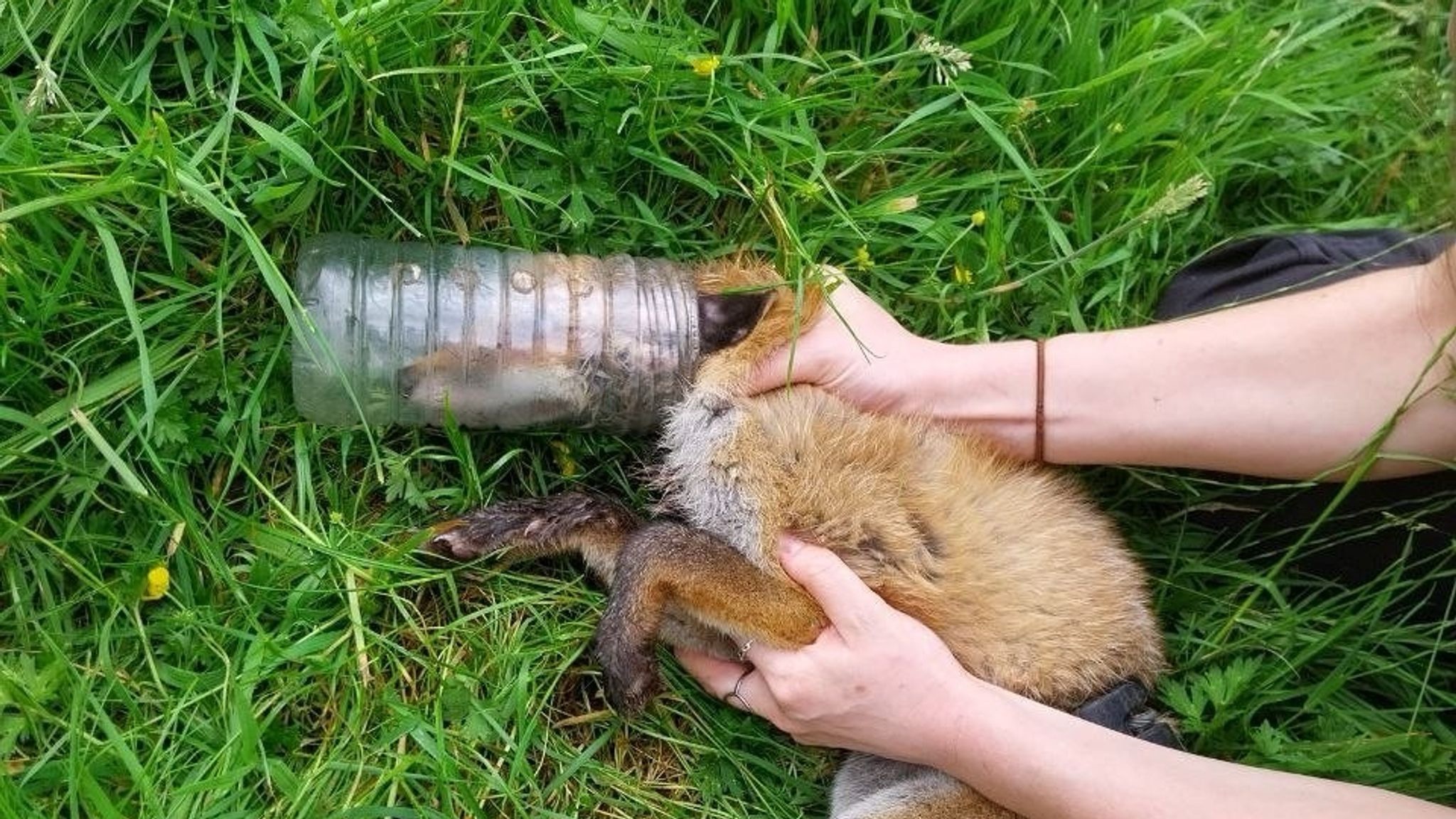
A young fox suffered cuts and swelling to its neck and face after spending almost two days trapped with its head inside a discarded plastic bottle in Glasgow, prompting the Scottish SPCA to renew warnings about the dangers litter poses to wildlife.
A fox cub has been treated for injuries after being rescued in Glasgow with its head stuck inside a plastic bottle for nearly two days. The Scottish SPCA was called to the scene after a member of the public spotted the young male fox trapped, but rescuers were initially unable to catch him as he kept retreating into his den. He was finally caught the following day and taken to Glasgow’s Small Animal Hospital for treatment.
Injuries and Emergency Treatment
By the time he was rescued, the fox, estimated to be around 12 weeks old, had sustained cuts and swelling around his neck and face, caused by the bottle repeatedly rubbing against his skin during the extended period he was trapped. Veterinarians removed the bottle and carried out a full health assessment, administering fluids and pain relief before the cub was kept overnight for observation.
On the Road to Recovery
The following day, the fox was transferred to the Scottish SPCA’s National Wildlife Rescue Centre in Clackmannanshire, where staff will continue to care for him until he has fully recovered and is strong enough to be released back into the wild.
A Warning About the Dangers of Litter
Animal rescue officer Ella Mackenzie said the fox had a narrow escape. “This fox was incredibly fortunate. Had we not managed to catch him, the injuries caused by the bottle could have become life-threatening,” she said. She stressed that such incidents are far from rare. “Sadly, this isn’t an isolated incident. Every year, we see wild animals injured, trapped or killed by discarded litter. Something as simple as taking your rubbish home or disposing of it properly can prevent animals suffering in this way.”
According to wildlife rescuers, plastic bottles, food containers, cans and discarded packaging are among the most common items of litter responsible for injuries to foxes, hedgehogs, birds and other wild animals.
Advice for the Public
The Scottish SPCA has urged members of the public not to attempt to approach or free trapped wild animals themselves, warning that frightened animals can injure both themselves and anyone trying to help, and to instead contact trained rescuers. The charity also reminded people that disposing of rubbish properly, and cutting through plastic rings or containers before recycling them, can significantly reduce the risk of wildlife becoming trapped in the first place.
