

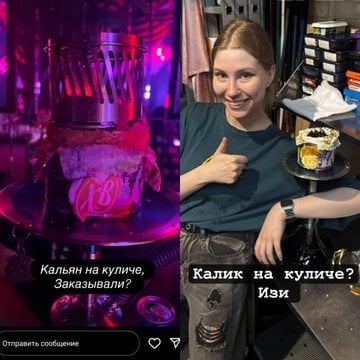
A young Moscow bar worker has been sentenced to more than three years in a penal colony for posting a video of herself smoking a hookah through a traditional Russian Easter cake — in a case that has drawn international condemnation as a stark illustration of Russia’s increasingly severe enforcement of religious offence laws.
Ksenia Belousova, 27, filmed herself on 13 April — the day after Orthodox Easter — using a kulich, the sweet yeast bread that holds deep symbolic significance in Russian Orthodox tradition as a representation of Christ’s resurrection, as a hookah bowl at the Kisski bar in central Moscow. She posted the clip to Threads and Instagram with the caption “Even Christ would rise from the dead for this,” noting in the footage that the hookah had been requested by a customer.
The video spread rapidly after far-right blogger Vladislav Pozdnyakov of the Male State movement shared it alongside a countdown to her public apology — a tactic he has deployed repeatedly against women he targets for online harassment. Russia’s Investigative Committee opened a criminal case the same day under Article 148 of the Criminal Code, which covers “insulting the feelings of believers,” describing the act as “public actions expressing clear disrespect for society” committed with intent to offend religious sentiment. Belousova was detained and forced to record a filmed apology, saying: “I repent… I didn’t want to offend anyone.”

On Tuesday, a magistrate at Lefortovo district court sentenced her to 3 years and 25 days in a general-regime penal colony. She was taken into custody immediately. The sentence substantially exceeds the one-year maximum the religious offence charge alone would carry — the reason being that Belousova was already serving a three-year suspended sentence from August 2025 for possession of more than five grams of mefedrone, a synthetic drug. Under Russian law, committing a new offence during a probationary period triggers automatic revocation of any suspended term, combining both punishments. Prosecutors had sought approximately 3 years and 2 months; the judge imposed a slightly lesser figure.
In court, Belousova asked to be fined rather than imprisoned and told the judge that both her father and brother were serving in the war in Ukraine. The appeal did not alter the outcome.
The law under which she was charged was introduced in 2013 in the wake of the Pussy Riot case, in which members of the feminist punk collective were jailed for performing a protest song inside Moscow’s Cathedral of Christ the Saviour. The legislation has been repeatedly criticised by human rights organisations as vague, selectively enforced and capable of criminalising expression that would be considered entirely unremarkable in any other European country. Supporters argue it protects public order in a society in which the Russian Orthodox Church is deeply intertwined with national identity and state authority.
The kulich is not a church sacrament but is widely revered among Orthodox Christians as a sacred Easter symbol, blessed by priests at services and carried home with considerable reverence. The case is not an isolated one. As reported by Meduza and Novaya Gazeta Europe, a separate criminal case was opened the day after Belousova’s arrest against a 20-year-old woman near St Petersburg over an Easter-related social media post similarly deemed offensive — suggesting the authorities were treating the Easter period as an occasion for heightened enforcement of the religious offence statute.
