

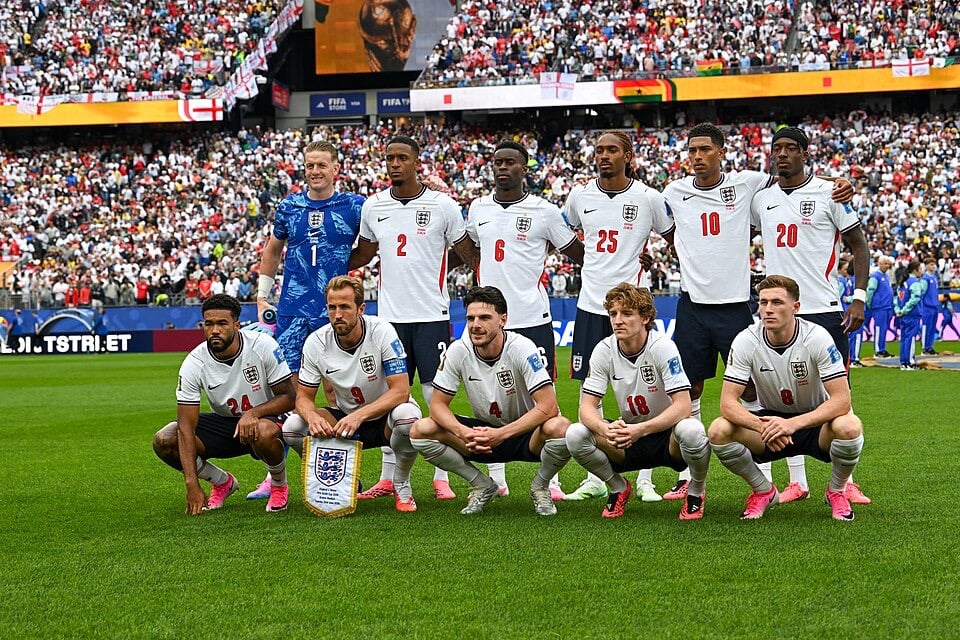
FIFA has confirmed that England’s opening goal against Norway at the World Cup was correctly allowed to stand, following an in-depth review that examined multiple camera angles and sensor data to determine whether the ball had struck an overhead spidercam cable. The governing body’s findings back the on-field decision that allowed Jude Bellingham’s goal to count, despite immediate protests from Norway’s players.
The controversy stemmed from the passage of play leading up to England’s first goal, when goalkeeper Ørjan Nyland took a goal kick that Norway believed had its trajectory altered by contact with a spidercam cable. Elliot Anderson collected the ball from the air and fed Anthony Gordon, whose pass ultimately set up Bellingham for the opening goal. Nyland and several of his teammates protested immediately, convinced the ball’s path had been affected before Anderson gained possession, according to the Daily Mail.
What the review examined
FIFA’s investigation drew on multiple sources of evidence, including several broadcast angles, a side-on replay, and footage taken directly from the spidercam system itself. According to the Daily Mail, the spidercam footage showed no “wobble” that would indicate contact with the ball, while the side-on replay revealed a smooth, natural arc as the ball reached its peak and began to dip. Although the ball’s flight did appear to change direction from certain broadcast angles, FIFA’s report concluded this was the result of an optical illusion created by the camera position, rather than any physical contact with the cable system.
Officials also examined data from the ball’s built-in sensor technology, which tracks impacts throughout matches. FIFA said in a statement issued shortly after the incident that the sensor had registered no impact consistent with contact against the spidercam cable, reinforcing the conclusion drawn from the visual evidence.
Why the ruling matters
The distinction was significant under the sport’s laws. Had the ball made contact with the spidercam, classified as an outside agent under IFAB’s Laws of the Game, play should have been stopped and restarted with a dropped ball rather than allowed to continue. Having reviewed the available evidence, FIFA found nothing to support the claim that the spidercam had interfered with play, meaning the decision to award England’s opening goal was the correct one.
