

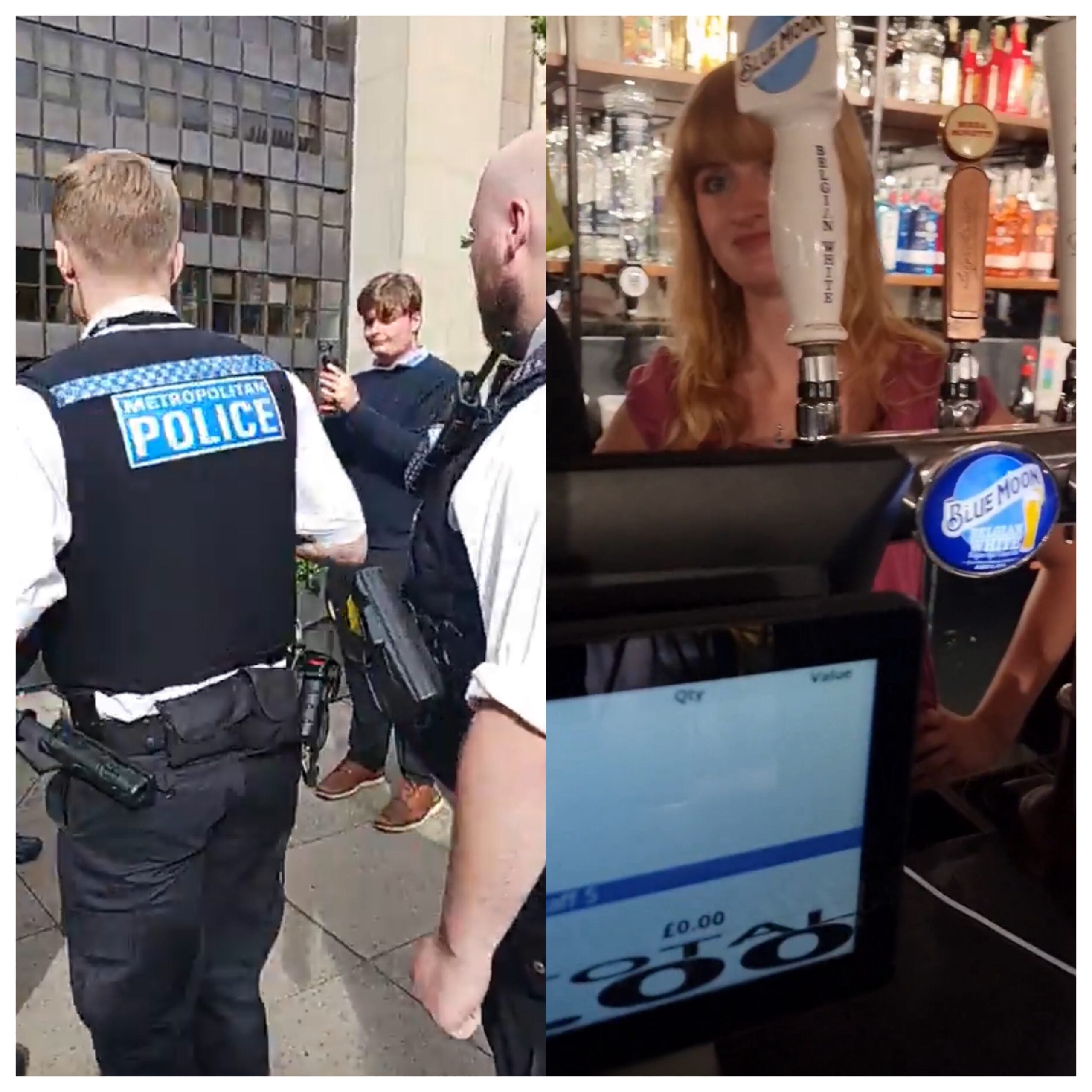
A Christian activist was removed from a University College London student bar and had police called on him — not for any disruptive or illegal behaviour, but because staff told him on camera they found his beliefs objectionable — in an incident that has reignited debate about free speech, discrimination law and ideological enforcement in British universities.
Young Bob, chief executive of Project Albion and a self-described Christian, pro-life and remigration activist who posts on X under the handle @YoungBobRB, had been attending a vigil in London for murdered 18-year-old Henry Nowak before entering the UCL bar. Video footage posted to X shows a manager telling him directly: “You are being kicked out because of your transphobic and homophobic beliefs, and the bar staff are uncomfortable.” No allegation of disruptive behaviour, threatening conduct or illegal activity was made at any point during the exchange.
Police were called solely over the presence of someone whose views staff found objectionable. As he was being removed, Young Bob challenged staff: “You’re kicking me out because I’m being offensive.” He later posted: “The police have now arrived, and I have been described as an Andrew Tate-like figure by the UCL staff member who removed me from the premises. However, I intend to continue protesting. I don’t care.”
He subsequently noted with some wry amusement that both the Guardian and the Evening Standard had described him as a far-right agitator. “Clearly, that means you’re pushing the buttons of the establishment,” he wrote, before urging followers not to allow him to become the story. “These people are detracting from the message surrounding Henry Nowak. Don’t let them do that. Keep pushing the message. We want justice.”
The legal dimension of the incident is considerable. Gender-critical beliefs and traditional Christian beliefs on biological sex are legally protected characteristics under the Equality Act 2010, as established through the Forstater rulings and subsequent case law. Denying service to an individual solely on the basis of such protected beliefs constitutes potential direct discrimination — irrespective of whether those doing the refusing find the beliefs distasteful. Young Bob has indicated he is considering formal complaints under equality legislation and to free speech organisations.
Universities also have obligations under the Higher Education (Freedom of Speech) Act, which received Royal Assent in 2023 and placed new duties on higher education institutions to protect lawful free expression. Whether a UCL student bar falls within the scope of those obligations is likely to be among the questions raised in any formal complaint.
The episode unfolded on the same day Deputy Prime Minister David Lammy appeared on LBC and declined to take the knee for Henry Nowak, saying the family wanted practical action on knife crime rather than symbolic gestures — drawing immediate comparisons with his vocal support for the same gesture during the Black Lives Matter movement in 2020. The contrast sharpened the sense, already widespread following the release of bodycam footage showing Nowak handcuffed and left to die, that different standards are applied to different victims and different communities in Britain.
Anti-racist organisation Stand Up to Racism faced heavy backlash earlier in the week after activists disrupted a vigil for Nowak outside Southampton police station, shouting throughout a planned three-minute silence marking the time he bled to death while handcuffed. That intervention, and now the UCL bar incident, have combined to make two-tier treatment by public institutions the dominant political conversation in Britain this week.
UCL was approached for comment.
