

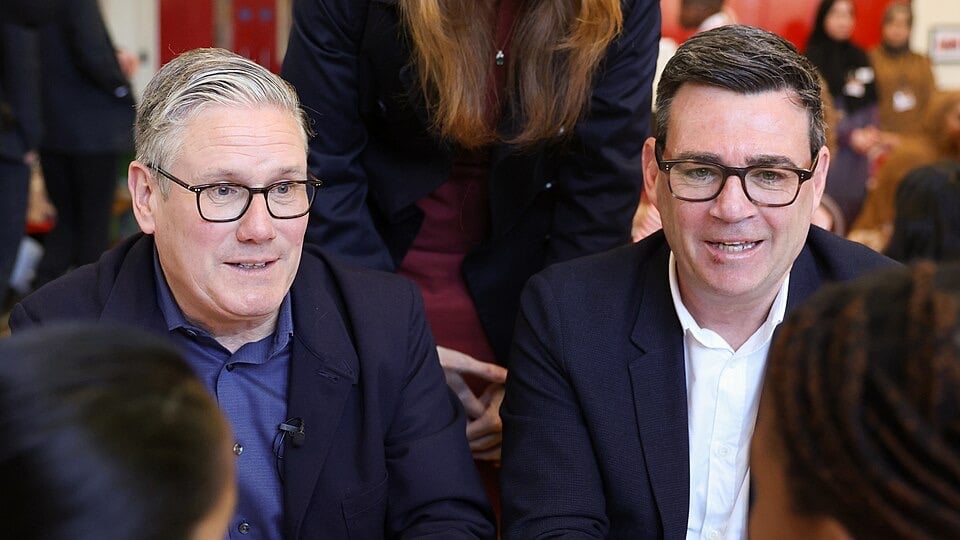
Andy Burnham has been quietly planning his path to Downing Street for at least a year and already has a blueprint for his first 100 days as Prime Minister, according to close ally Louise Haigh, as his path to the Labour leadership became all but certain on Thursday when nominations opened to replace Keir Starmer.
Andy Burnham‘s team has already begun laying the groundwork for government, with allies holding informal talks with senior civil servants to ensure preparations are in place should he become Prime Minister. The revelation, made by former Transport Secretary Louise Haigh on the BBC’s Political Thinking podcast, came as nominations opened in the Labour leadership contest to replace Keir Starmer, and as former defence minister Al Carns, believed to be the last remaining Labour MP considering a challenge, confirmed he would not stand against Burnham. That leaves Burnham almost certain to take office on 20 July without a contest, with allies expecting him to formally announce his leadership campaign shortly after nominations close.
A Plan a Year in the Making
Haigh, tipped for a major role in a future Burnham Cabinet, said the former Greater Manchester Mayor had been preparing for this moment for far longer than most people realise. “I don’t think I am breaking any state secrets to say Andy has been thinking and has had his ambition, his ambitions have been clear for some time,” she said. “Of course he’s run for leader twice before, so this is hopefully, touch wood, third time, third-time lucky. So he’s, you know, he’s been thinking about this and certainly planning for this, for this moment, for at least a year.” Asked whether a concrete plan existed for his first 100 days in office, Haigh confirmed one does, though declined to share details: “Yes, of course there’s a plan. I’m not going to tell you about it here.”
Devolution Set to Be a Priority
Haigh said one of Burnham’s key priorities in government would be deepening devolution across England, pushing more powers out to regional mayors and local authorities. She has been directly involved in the transition planning alongside Burnham and James Purnell, who previously served as a Cabinet minister under Gordon Brown before moving into senior media executive roles and is now expected to become Burnham’s chief of staff. Their discussions have focused on national security, the economy and devolution, coming after Starmer’s former chief of staff, Morgan McSweeney, admitted Labour had failed to adequately prepare for power ahead of the 2024 general election — pointing specifically to early missteps such as cutting winter fuel payments for pensioners, which he said “defined the government in a way that really did us a lot of damage.”
Nine Years Outside Westminster Framed as an Asset
Haigh firmly rejected any suggestion that Burnham’s nine years away from Westminster as Mayor of Greater Manchester left him unprepared or politically detached for the role of Prime Minister. Instead, she argued his time delivering public service reforms in areas including transport, policing and devolved government had given him practical experience that better equipped him for national leadership. “He has spent that time thinking very deeply about how the country is run, what holds regions like Greater Manchester, and therefore most regions and the devolved nations of this country, back,” she said. “He has got very, very clear ideas and a plan to put that right.”
Haigh Revisits Her Own Departure From Cabinet
Haigh also used the interview to reflect on her own resignation as Transport Secretary in 2024, several months into Labour’s time in government, after it emerged she had pleaded guilty to a criminal offence relating to falsely telling police in 2013 that a work mobile phone had been stolen. She said she felt personally let down by how Keir Starmer handled the situation, arguing the episode had damaged trust between them.
She told the BBC that Downing Street had initially approved a statement from her confirming she had already disclosed the matter to Starmer, only for his chief of staff, Morgan McSweeney, to call and ask her to resign. “I had to really push even for a conversation with Keir, he didn’t want to have that conversation with him himself, and both Morgan and he kept saying, ‘Well, additional information has emerged’, but at no point would any of them tell me what that additional information was,” she said. “And afterwards they repeated that. And it was painful because they could have said, ‘Look, these headlines are awful, and it’s not going to be nice for you to ride them out’. And it wasn’t. And to be honest, I would have agreed, and I would have gone on that basis because I didn’t particularly want to ride them out. It was embarrassing, and it wasn’t pleasant to go through. But to pretend that I hadn’t told him and to brief so consistently and so viciously for quite a number of weeks after that was a deliberate attempt to knock my character down.”
