

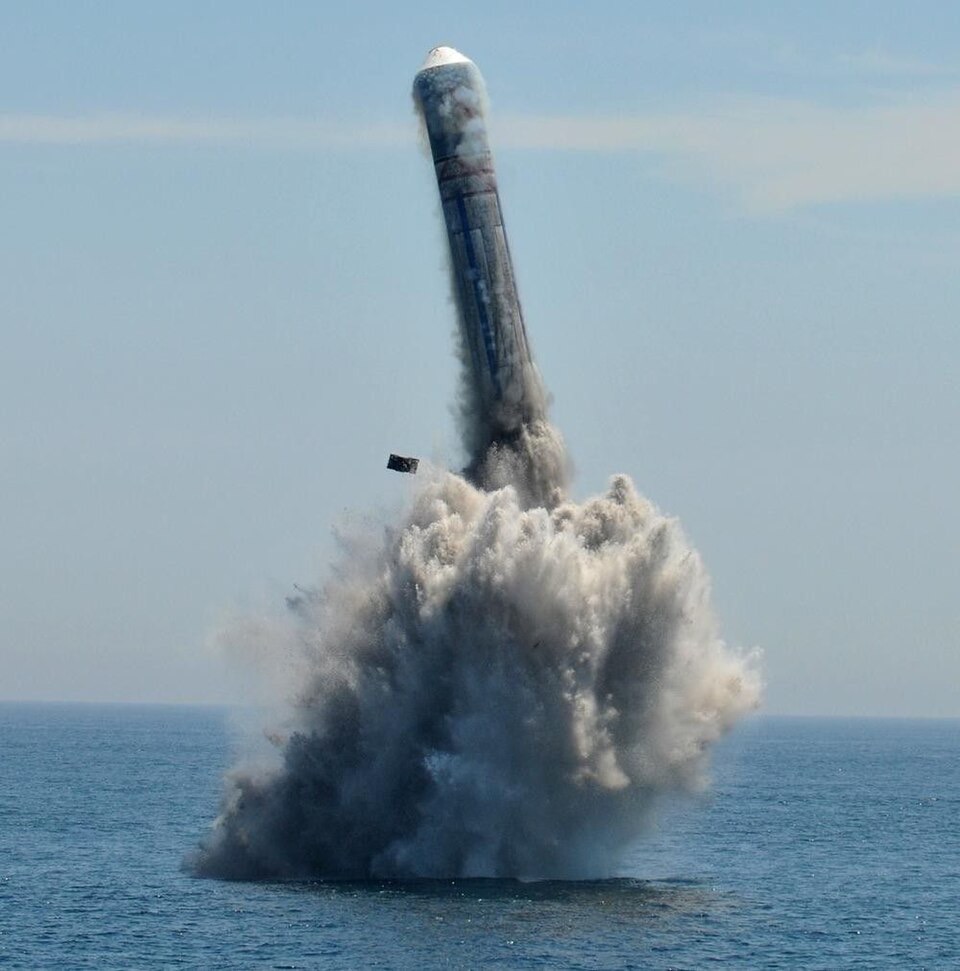
China fired a long-range ballistic missile from a nuclear-powered submarine into the South Pacific on Monday, drawing criticism from Australia, New Zealand and Japan just hours after Beijing gave notice of the test, and on the same day Australia signed a new defence pact with Fiji.
China carried out a long-range ballistic missile test in the South Pacific on Monday, launching from a nuclear-powered submarine in a move that drew swift criticism from Australia, New Zealand and Japan. State news agency Xinhua said the launch took place at 12.01pm local time, using a dummy warhead as part of what Beijing described as routine annual training that complied with international law and was not directed at any country. The test came hours after China informed Australia of its plans, according to deputy prime minister Richard Marles, and on the same day Australia signed a new defence agreement with Fiji.
A Submarine-Launched Test
Unlike China’s last Pacific ballistic missile test in 2024, which used an intercontinental-range projectile, Monday’s launch was carried out by the People’s Liberation Army Navy from a nuclear-powered submarine, demonstrating Beijing’s sea-based nuclear capabilities. Defence analysts believe the missile involved was likely either a JL-2 or the newer JL-3 submarine-launched ballistic missile, both capable of carrying nuclear warheads over thousands of miles. Chinese state media said the missile landed in a pre-designated area of the Pacific Ocean, though Beijing did not disclose the precise location. The test marks only China’s second strategic missile launch into the Pacific since 2024, with the previous test in that year having been the country’s first such launch into the region since 1980.
Notified, Then Fired Within Hours
Richard Marles told a press conference that Australia had received advance notice from Beijing. “We were informed by China today of its intention to do this test,” he said, adding: “This is a long-range missile test, and we are very concerned about any actions which undermine the stability, the peace, and security of the Pacific.”
New Zealand received similar notice but voiced frustration at the short timeframe between warning and launch. Foreign minister Winston Peters told the Associated Press: “It appears that despite our long-standing concerns about this type of activity, China carried out the test within hours of informing us.” New Zealand’s government also noted that the missile was fired into the South Pacific Nuclear Free Zone, established under the 1986 Treaty of Rarotonga, which prohibits nuclear weapons across the region. China ratified the treaty’s protocols in 1987, committing not to test nuclear weapons within the zone or threaten their use against signatory nations with territory there.
Japan also raised concerns, saying it had been notified in advance of possible falling debris and describing the launch as a move that heightened tensions across the region.
Criticism Over Transparency
Speaking from Fiji, Australian foreign minister Penny Wong said Canberra had made its position clear to Beijing. “[Australia] has been clear with China that we regard this as destabilising to the region,” she told reporters. Wong also criticised what she described as a lack of transparency from Beijing, saying the test came amid China’s rapid military expansion and fell short of the reassurance countries in the region expect.
Timing Alongside a New Pacific Alliance
The missile test came on the same day Australia and Fiji signed their new Ocean of Peace Alliance defence agreement, though Australian officials said they were not drawing a direct connection between the two events. Fijian Prime Minister Sitiveni Rabuka said the new pact “does not threaten Fiji’s relationship with China nor Australia’s relationship with China.”
Beijing Defends the Exercise
China has urged the region not to overreact to the test, defending it as a routine component of its annual military training programme. Officials reiterated that the exercise complied with international law and practice and was not aimed at any specific country or target.
