

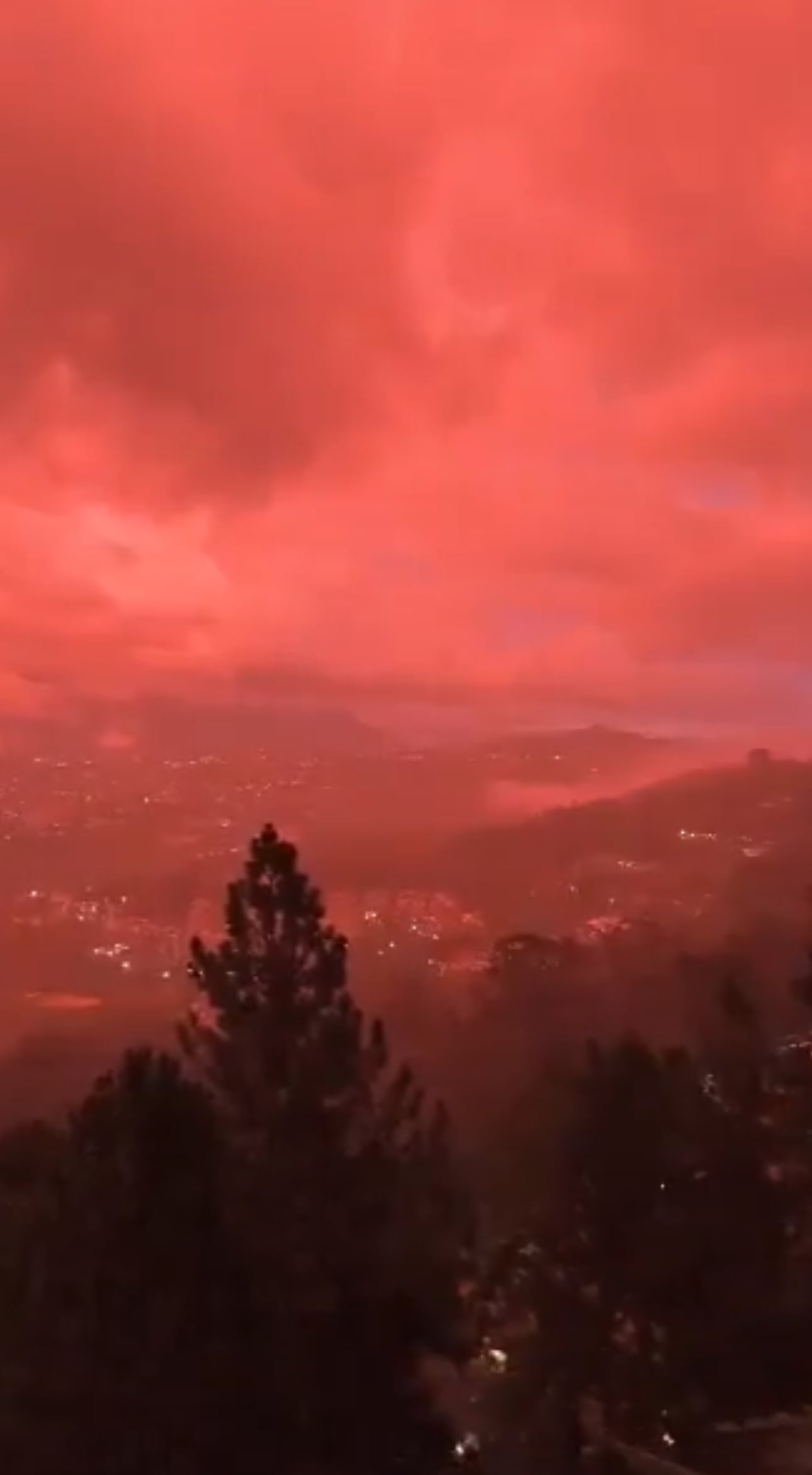
A dramatic blood-red sky has been captured over Venezuela’s capital Caracas, sending footage viral across social media as a grief-stricken nation continues to recover from twin earthquakes that have now killed nearly 2,000 people.
Eyewitness videos and photographs taken at sunset around 30 June show a vivid crimson and red-orange sky blanketing Caracas, sparking widespread speculation online that the phenomenon was connected to the earthquakes that devastated the country just days earlier. Many viewers described the scenes as “apocalyptic.”
Scientists have moved quickly to explain the striking display. Experts attribute the red sky primarily to Rayleigh scattering, the atmospheric process by which shorter blue wavelengths of light are scattered away at sunset, leaving the longer red and orange wavelengths to dominate. The effect has been significantly amplified by Saharan dust crossing the Atlantic Ocean, a periodic phenomenon that affects the Caribbean and South America and intensifies the reddening of the sky. Some local particulates in the atmosphere, potentially including dust and debris from the earthquake destruction, may have played a minor additional role, though experts emphasise the earthquakes themselves are not the direct cause of the phenomenon and that the timing is coincidental.
The striking skies come as Venezuela remains in the grip of a deepening humanitarian crisis. The twin earthquakes that struck near Veroes in Yaracuy state on 24 June — a magnitude 7.2 foreshock followed just 39 seconds later by a 7.5 mainshock — have now killed 1,943 people, with more than 10,500 injured, thousands still missing and an estimated 15,000 to 16,000 people displaced from their homes. The quakes, the strongest to strike the region in decades, caused catastrophic damage across La Guaira and Caracas, collapsing buildings and destroying infrastructure across wide areas. Rescue efforts are continuing amid ongoing aftershocks, with international aid teams on the ground assisting Venezuelan authorities.
The red sky, known locally as a “candilazo” or lantern-like glow, is a recognised meteorological phenomenon in the region when dusty atmospheric conditions coincide with sunset. Similar events occur periodically across the Caribbean and northern South America during periods of elevated Saharan dust transport. In ordinary circumstances it would pass without remark — but in a country still pulling bodies from rubble and counting its dead, the sight carried a weight that science alone could not entirely explain away.
