

French police investigate after viral listings raise fears — but platform insists no evidence of trafficking has been found
A wave of unsettling listings on the second-hand marketplace Vinted has prompted French police to investigate whether the platform is being exploited by child traffickers, though the company itself says it has found no credible evidence to support the claim.
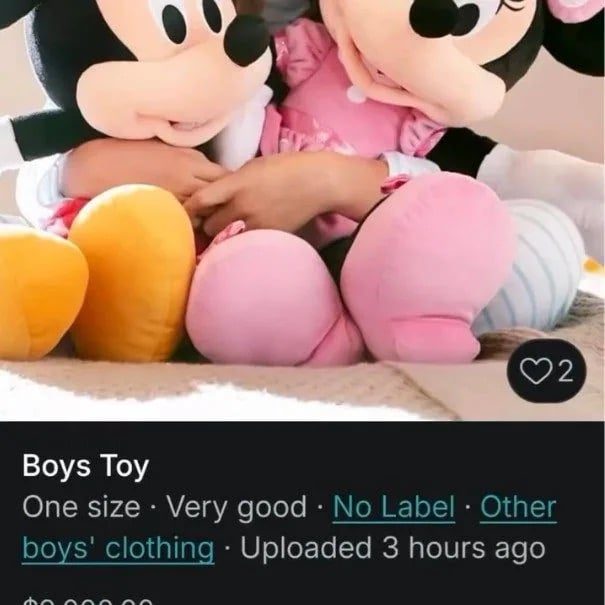
The question has gripped social media in recent weeks, after users began noticing resale adverts for children’s toys priced at extraordinary sums and worded in ways many interpreted as sexually coded. Screenshots of the listings were compiled into videos by content creators and shared widely online, fuelling speculation that the posts were a front for something far more sinister than second-hand toy sales.

One listing, for a “bunny stuffed animal,” was priced at €1,000 (£865) and described the item as a three-year-old female weighing 2st and measuring 91cm — small, blonde, blue-eyed and obedient. Another, for an Etch A Sketch toy priced at €6,000 (£5,180), used sexualised language to describe the item as 13 years old, shy, anxious and noisy. It was listings such as these that convinced many users something was seriously wrong.
The concern reached the highest levels of French government. Sarah El Haïry, France’s high commissioner for children, referred the posts to police, saying she preferred caution over complacency. “You can never be too careful,” she wrote on social media. “I would rather see a strict precautionary principle applied than a single child left at the mercy of their abusers.” She added that platforms “have a responsibility” to ensure “no space should be a hunting ground for predators,” and called for the matter to be examined “without any taboos.”

A specialist police unit dealing with crimes against minors has now taken on the investigation.
Vinted, for its part, maintains that the answer to the trafficking question is no. In a statement to Agence France-Presse, the Lithuania-based company said its own checks had found no credible evidence linking the listings to child trafficking. It said it was actively removing fake posts it believes were deliberately created to “fuel this conversation,” and offered an alternative explanation for the postings: the ages referenced, it said, typically corresponded to the age group a toy was designed for, while the inflated prices could reflect “either genuine collector’s value, or provocative behaviour, or bargaining tactics.”
Whether or not this latest scare amounts to genuine evidence of trafficking, it is not the first time Vinted has faced such suspicions. Similar rumours spread in 2023, when steeply priced listings for used children’s clothing were interpreted by some online as concealing a trafficking network. Separately, French authorities launched an inquiry last year after discovering that sellers were using swimwear and lingerie listings to promote OnlyFans accounts or sell explicit content — material accessible to minors because Vinted does not require age verification. Those listings, too, were flagged by Ms El Haïry.

The pattern is not unique to Vinted. Shein, Temu, AliExpress and Wish have all faced scrutiny in France, after it emerged that child-like sex dolls were being sold on the Shein platform. And in the US in 2020, furniture retailer Wayfair was targeted by QAnon conspiracy theorists who wrongly claimed the company was using storage cabinets to smuggle missing children.
For now, the question of whether Vinted has genuinely been used for trafficking remains unanswered — a matter for French police to determine, rather than the court of social media.
