

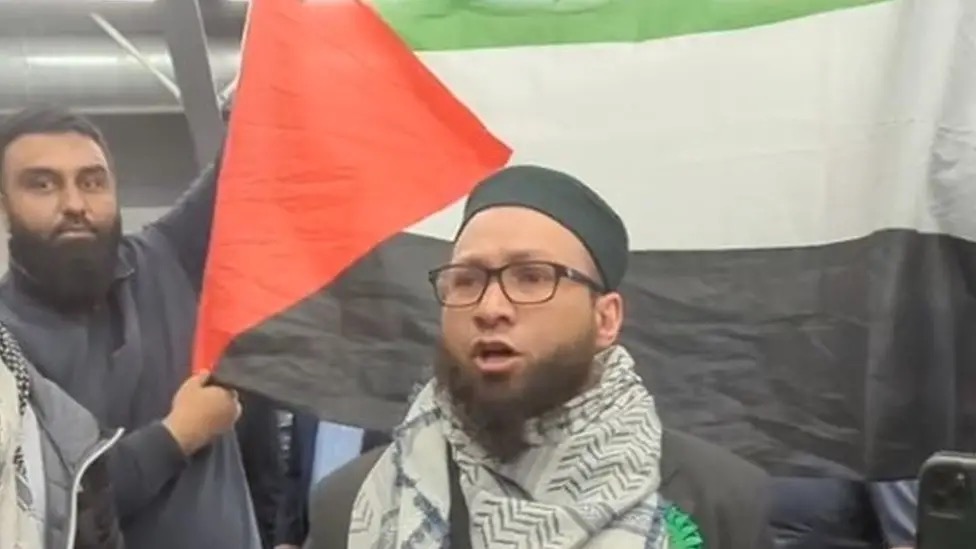
More than 570 candidates who centred their local election campaigns on Gaza and other overseas Muslim grievances rather than issues within their council’s remit have won seats across England, according to analysis by the Henry Jackson Society — a finding that has reignited debate about the influence of identity politics and transnational issues on British local democracy.
The Henry Jackson Society identified 572 “sectarian-style” candidates elected across 58 councils and two mayoral races, with the figure expected to rise to 574 once Birmingham City Council completes its final count. The breakdown by party shows the Green Party accounting for the largest share with 350 seats, followed by independents on 132, Labour on 84 and the Liberal Democrats on six — making up more than one in ten of the approximately 5,000 council seats filled at the elections.

The think tank defined “sectarian-style” candidates as those whose publicly available campaign materials — leaflets, websites, social media posts and public statements — repeatedly and prominently foregrounded issues such as Gaza, Kashmir and Palestinian rights as the central thrust of their electoral pitch, rather than local matters such as housing, roads or social services. Candidates were not classified on the basis of isolated or incidental references to these topics. The standard required that relevant material remained publicly accessible and verifiable online, making the classification more susceptible to undercounting than overcounting.
The HJS analysis found that the statistically significant predictors of sectarian-style wins at ward level were Muslim share of the population, voter turnout and the under-30 population — suggesting that high-density Muslim wards with engaged younger voters were the primary terrain for this form of mobilisation.
The analysis has sparked considerable debate. Critics of the framing argue that labelling candidates as “sectarian” for campaigning on Gaza oversimplifies what many voters consider a fundamental moral and humanitarian issue. They also note that bloc voting is not unique to Muslim communities, and question whether the Henry Jackson Society — a security and integration-focused think tank whose outlook has been described as neoconservative — is well-placed to make politically neutral judgements about candidate motivations.
Those raising alarms point to a structural concern: local councils in England have no formal competence over foreign policy, armed conflict or diplomatic questions. As one Spiked analysis put it, councils “are not meant to function as a stage for sectarian grievance or foreign-policy cosplay,” arguing that the trend risks transforming local democracy into a proxy arena for international conflicts.
The phenomenon is not new but its scale has grown sharply since the outbreak of the Israel-Hamas conflict in October 2023. A similar, smaller wave of “Gaza independent” candidates was observed at the 2024 general election, with several winning parliamentary seats. The 2026 local elections appear to represent a significant escalation of that pattern, concentrated particularly in urban areas with large South Asian Muslim populations where community cohesion around the Palestinian cause has translated directly into electoral results.
