

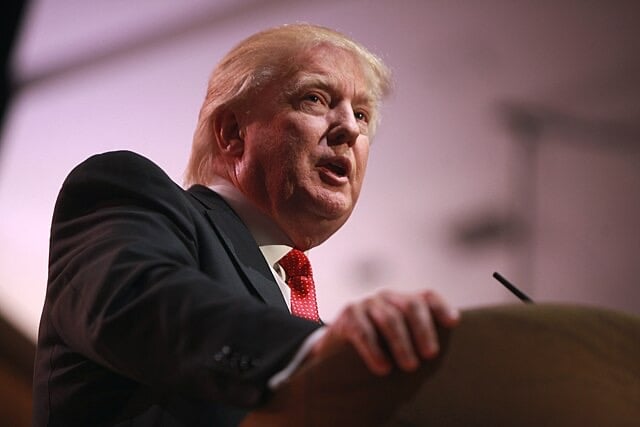
The murky intersection of geopolitical intelligence and speculative gambling crystallised this week when dozens of anonymous traders extracted over $200,000 from cryptocurrency prediction markets by wagering on an Iran ceasefire announcement hours before President Donald Trump declared a two-week truce—profits that lawmakers and regulatory experts now characterise as probable evidence of insider trading within a platform operating beyond traditional financial oversight.
The controversy engulfing Polymarket, a blockchain-based prediction platform where users bet on real-world events using cryptocurrency, centres not merely on the profits extracted but on the impossibility of legitimate forecasting given available information. As Trump posted apocalyptic warnings Tuesday morning that “a whole civilization will die tonight” unless Tehran reopened the Strait of Hormuz by his deadline, roughly 50 newly-created accounts were simultaneously placing substantial wagers that a ceasefire would materialise that very day—a bet so counterintuitive to public information that Republican Congressman Blake Moore deemed it functionally impossible without access to privileged knowledge.
“It’s highly unlikely that these are good-faith trades; it’s much more likely that these are insiders with access to information ahead of the public,” Moore stated, identifying the structural vulnerability that unregulated prediction markets create. “Without some kind of restrictions, there is nothing stopping government or military officials from profiting from their positions.”
The scale of winnings suggests sophisticated actors rather than casual speculators. One account established Tuesday at 10am Eastern Time staked approximately $72,000 at odds implying just 8.8 percent probability of ceasefire success, subsequently extracting $200,000 when Trump announced the truce around 6:30pm. Another trader who joined the platform merely one day prior secured $125,500, whilst a third account created twelve minutes before Trump’s announcement netted $48,500 profit from a $31,908 wager placed at 33.7 cent odds.
Why Polymarket’s Anonymous Structure Enables Systematic Exploitation
The platform’s architectural choices appear designed to frustrate accountability rather than facilitate legitimate price discovery. Polymarket employs proxy smart contract wallets that permit individual users to operate multiple anonymous accounts simultaneously, rendering impossible the basic identity verification that traditional financial markets require. This design means Tuesday’s 50 suspicious accounts could represent 50 separate traders, a single coordinated group, or even government insiders operating through technological intermediaries to obscure their identities.
The absence of know-your-customer requirements that govern conventional betting exchanges and securities markets creates environment where pattern detection identifies suspicious activity but attribution remains impossible. Platform administrators can observe that newly-created accounts placed precisely-timed, highly-profitable wagers on geopolitically sensitive events, yet possess no mechanism to determine whether those accounts belong to White House staffers, intelligence analysts, military officers with operational knowledge, or legitimate speculators with extraordinary intuition.
Tuesday’s episode follows disturbingly similar patterns identified in recent months. A single Polymarket user documented in February had accumulated $1 million through a 93 percent success rate on predictions involving Iranian military operations—including bets placed hours before unannounced Israeli strikes in October 2024, US airstrikes against Iranian nuclear facilities in June 2025, and the joint US-Israeli bombardment on 28 February that triggered the current conflict. The statistical improbability of such accuracy without privileged information approaches mathematical impossibility.
Similar suspicious clusters emerged surrounding the January capture of Venezuelan President Nicolás Maduro, where newly-created accounts again secured hundreds of thousands in profits through prescient wagers placed shortly before the event occurred. The recurring pattern—new accounts, large wagers, perfect timing on geopolitically sensitive events—suggests systematic rather than coincidental exploitation.
Todd Philips, a Georgia State University professor specialising in prediction market regulation, argued the incidents demonstrate conclusively that current self-regulation proves inadequate. “This is why these markets need regulation,” Philips stated. “We can’t have people trading with inside information and expect other traders are going to be OK being in these markets.”
What Tuesday’s Betting Patterns Reveal About Information Asymmetry
The timing and pricing of Tuesday’s wagers expose the gap between public information and insider knowledge. Trump’s social media declaration that Iranian civilisation would “die tonight” represented the most recent public signal available to market participants—messaging suggesting imminent military escalation rather than diplomatic resolution. Yet accounts created that morning wagered tens of thousands of dollars that ceasefire would materialise, accepting odds implying low probability because they apparently possessed certainty unavailable to other traders.
The evolution of betting prices throughout the day provides additional insight. The account created twelve minutes before Trump’s announcement paid 33.7 cents per contract—substantially higher than the 8.8 cents morning traders secured—likely reflecting late-day efforts by Pakistani intermediaries to negotiate deadline extension becoming partially visible to market participants. Even this elevated price implied roughly one-third probability of success, suggesting most traders remained sceptical until the official announcement.
Some analysts proposed alternative explanation: traders may have anticipated Trump would retreat from his deadline based on his pattern during his second term of issuing bold threats before backing down—a phenomenon critics term “Trump Always Chickens Out” or TACO. However, this theory struggles to explain why such bets would concentrate in newly-created accounts placing their inaugural wagers, rather than established users with track records of profiting from presidential psychology predictions.
The concentrated timing, substantial sums involved, and exclusive focus on this single event by accounts with no prior trading history appear inconsistent with speculative wagering on general Trump behaviour patterns. More plausibly, traders possessed specific knowledge that ceasefire negotiations had reached conclusion, enabling them to wager with confidence whilst Trump’s public messaging maintained pressure through apocalyptic rhetoric.
The Regulatory Vacuum and What It Means for Market Integrity
Polymarket operates in jurisdictional grey zone that traditional financial regulators struggle to address. Based offshore and utilising cryptocurrency transactions, the platform claims exemption from securities regulations governing conventional prediction markets and betting exchanges. Users access the platform through decentralised blockchain infrastructure that complicates enforcement actions even when regulators identify violations.
This regulatory arbitrage enables Polymarket to offer products that conventional operators cannot—permitting Americans to bet on elections, military operations, and diplomatic negotiations that regulated prediction markets must exclude. The resulting information aggregation theoretically provides valuable price discovery about event probabilities, yet the mechanism breaks down entirely when participants can trade on privileged information unavailable to counterparties.
Traditional securities markets combat insider trading through identification requirements, surveillance systems, and severe penalties including imprisonment for violations. Polymarket’s anonymous structure eliminates the first element, whilst offshore registration and cryptocurrency transactions complicate the second and third. The result creates paradise for insider trading that legitimate financial markets spent decades eliminating through hard-won regulatory frameworks.
Polymarket has yet to release Tuesday’s winnings, designating the ceasefire contract as “disputed” given Iran’s continued restrictions on Strait of Hormuz shipping and ongoing regional missile attacks. Platform rules permit 48-hour dispute resolution periods when contract terms face ambiguity—a delay that prevents immediate profit extraction but does not address the fundamental question of whether those profits represent legitimate speculation or illegal insider trading.
The platform declined to comment on the controversy, maintaining silence that appears increasingly untenable as congressional scrutiny intensifies. Moore’s concerns about “government or military officials profiting from their positions” identify the core vulnerability: if prediction markets can be exploited by insiders without consequence, they transform from price discovery mechanisms into wealth transfer systems that reward privileged access rather than analytical skill.
Whether regulatory action materialises depends partly on jurisdictional questions about platforms operating offshore whilst serving American users, and partly on political will to confront rapidly-evolving decentralised finance infrastructure that often moves faster than legislative processes. For now, the Tuesday windfalls stand as testament to what occurs when sophisticated financial instruments operate without the safeguards that conventional markets consider foundational to integrity.
