

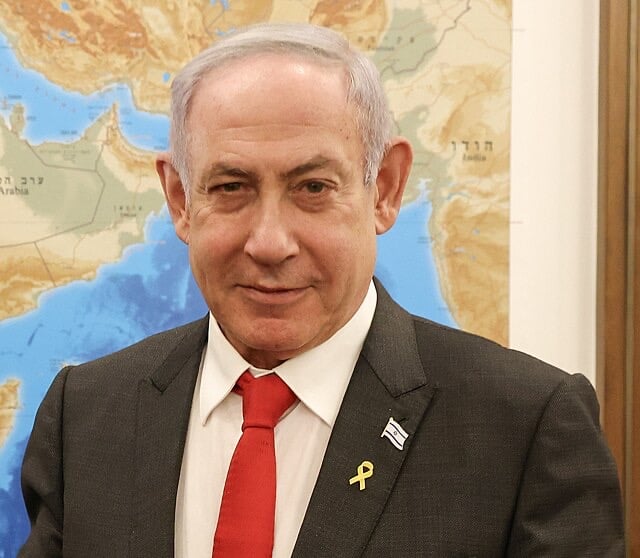
The precarious political equilibrium sustaining Benjamin Netanyahu’s hold on power confronts dual stress tests in coming months, as Israel’s judiciary confirmed Thursday that the prime minister’s corruption proceedings will recommence Sunday—hours after emergency measures imposed during Iranian bombardment were lifted—whilst October elections loom with polling suggesting his right-wing coalition faces potential electoral annihilation.
The convergence of legal jeopardy, military crisis management, and looming democratic accountability creates unprecedented circumstances for a Western democracy’s leadership. Netanyahu becomes the first sitting Israeli prime minister compelled to alternate between directing national security strategy and defending himself against criminal charges of bribery, fraud and breach of trust—allegations he has denied since their filing in 2019 following years of investigation.
Israeli courts announced that “with the lifting of the state of emergency and the return of the judicial system to work, hearings will resume as usual,” scheduling proceedings for Sundays through Wednesdays. The emergency declaration, which shuttered schools and workplaces as Iranian missiles rained on Israeli territory, was rescinded Wednesday evening following a ceasefire agreement that has seen no incoming projectiles since 3am local time Thursday.
Yet the fragile truce that enables Netanyahu’s courtroom appearances may prove shorter-lived than the legal proceedings themselves. Extensive Israeli military operations in Lebanon targeting the Iran-backed Hezbollah militia threaten to reignite regional hostilities that the 28 February joint US-Israeli strikes on Iran ostensibly sought to contain through dismantling Tehran’s nuclear programme and encouraging regime overthrow.
Why October Elections Compound Netanyahu’s Legal and Military Calculations
The prime minister’s strategic positioning grows increasingly constrained as October’s scheduled elections approach with his coalition—characterised as Israel’s most right-wing government in history—facing probable defeat according to current polling. Netanyahu’s standing has deteriorated markedly since the October 2023 Hamas attacks exposed security failures under his watch, compounded by the grinding legal proceedings that have dominated Israeli political discourse for half a decade.
The trial’s resumption introduces additional complication: regular court appearances scheduled multiple days weekly create logistical and political burdens that Netanyahu’s supporters, including US President Donald Trump, argue undermine his capacity to govern effectively. Trump has publicly endorsed Netanyahu’s appeals to Israeli President Isaac Herzog for a pardon, citing the impact of judicial proceedings on prime ministerial duties.
Herzog’s office has indicated it will follow standard pardons department procedures—gathering opinions for submission to the president’s legal adviser who will formulate recommendations—though officials noted that pardons are not typically granted mid-trial. This procedural norm places Netanyahu in limbo: unable to secure legal resolution before facing voters, yet compelled to defend himself in court whilst managing both active military operations and domestic political collapse.
The charges themselves—bribery, fraud and breach of trust filed in 2019—stem from investigations examining Netanyahu’s relationships with media executives and wealthy businessmen, allegations suggesting systematic abuse of office for personal gain. The trial commenced in 2020 but has suffered repeated delays attributed to Netanyahu’s official commitments, with no projected conclusion date establishing when definitive verdicts might materialise.
Potential jail terms hang over proceedings should convictions result, creating extraordinary scenario where Israel’s longest-serving prime minister could transition directly from office to incarceration. This prospect influences both Netanyahu’s legal strategy—which emphasises procedural delays and challenges—and his political positioning, where maintaining power offers protection that private citizenship cannot provide.
What the Iran Ceasefire’s Fragility Means for Domestic Stability
The hostilities that necessitated Israel’s emergency declaration originated from the 28 February joint strikes with the United States, military action Trump and Netanyahu characterised as necessary to prevent Iranian force projection internationally whilst dismantling nuclear infrastructure and encouraging internal regime change. The ambitious objectives suggested sustained campaign rather than limited operation, yet the subsequent ceasefire—however tenuous—creates breathing space for domestic institutions including the judiciary to resume normal operations.
That normalisation proves double-edged for Netanyahu. Whilst emergency conditions provided justification for suspending or delaying legal proceedings given national security imperatives, the ceasefire’s restoration of civilian routines eliminates that rationale. Courts can reasonably argue that if schools reopen and workplaces resume operations, judicial proceedings against the nation’s leader can likewise continue without compromising security.
Israeli operations in Lebanon targeting Hezbollah—the Iran-backed militia whose capabilities threaten northern Israel—maintain military pressure that could trigger renewed Iranian retaliation and subsequent emergency declarations. Whether Netanyahu views continued low-intensity conflict as strategically necessary or politically convenient remains subject to interpretation, though cynics note that emergency conditions serve dual purposes of advancing security objectives whilst providing cover for postponing uncomfortable legal reckonings.
The absence of incoming Iranian missiles since Thursday’s pre-dawn hours suggests the ceasefire holds at least temporarily, though regional analysts caution that ceasefires and truces in Middle Eastern conflicts frequently prove preliminary to renewed escalation rather than durable settlements. Hezbollah’s response to Israeli operations, Iran’s tolerance for attacks on its regional proxies, and internal Israeli political dynamics surrounding the October elections all influence whether current calm persists or evaporates.
Trump’s involvement adds unpredictable element. His endorsement of Netanyahu’s pardon request and broader support for Israeli military operations reflects both personal affinity and strategic calculation about maintaining regional alignment against Iran. Yet the Iran ceasefire—however fragile—represents tacit acknowledgment that military escalation carries costs Trump proved unwilling to sustain indefinitely, potentially constraining Netanyahu’s freedom of action should he contemplate provocations designed to reignite hostilities that might again justify judicial delays.
The intersection of Netanyahu’s legal vulnerability, his coalition’s electoral weakness, and the tenuous regional security environment creates conditions where multiple pressures converge simultaneously. Sunday’s court resumption forces the prime minister to physically appear in settings where he exercises no control, answering to judges rather than commanding subordinates, whilst October’s elections approach with polling suggesting voters prepare to render verdict more damning than any court might deliver.
Whether Netanyahu navigates these compounding challenges through political skill, external events that reshape electoral calculations, or some combination remains uncertain. What stands established is that Israel’s judiciary has determined that ceasefire conditions permit legal proceedings to continue regardless of political inconvenience—a reassertion of institutional independence that democracies require even when, perhaps especially when, those proceedings target sitting leaders directing military operations against regional adversaries.
