

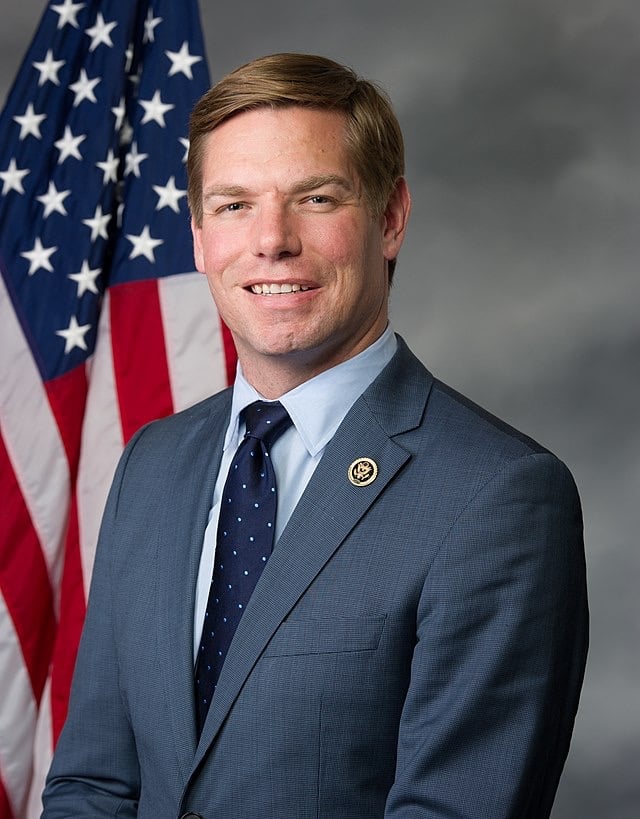
A Democratic congressman’s calculated attempt to neutralise circulating rumours through aggressive pre-emptive denial collapsed spectacularly Friday when the San Francisco Chronicle published detailed sexual assault allegations from a former staffer—accusations that prompted immediate defections from Eric Swalwell’s gubernatorial campaign and raised fundamental questions about the viability of his front-runner status in California’s October election.
The implosion began days earlier when Swalwell’s campaign issued what spokesman Micah Beasley characterised as rebuttal to “false, outrageous rumor” being spread “27 days before an election begins by flailing opponents who have sadly teamed up with MAGA conspiracy theorists.” The Wednesday statement denied that anyone in Swalwell’s congressional office had been asked to sign non-disclosure agreements and insisted no ethics complaints had been filed during his 13 years in Congress—defensive positioning that inadvertently confirmed serious allegations were imminent whilst failing to address their substance.
The Chronicle’s subsequent reporting detailed claims by a woman who worked for Swalwell from 2019 to 2021, alleging two incidents of sexual assault whilst she was too intoxicated to consent. The first allegedly occurred in September 2019 when Swalwell invited her for drinks during her employment; she told the newspaper she became so inebriated she doesn’t remember events but woke naked in his hotel bed and “could feel the effect of vaginal intercourse.”
Britannia Daily confirmed the woman’s 2019-2021 employment with Swalwell’s office.
The second alleged assault occurred in April 2024, after her employment ended, when she met Swalwell for drinks following a charity gala honouring the congressman. She again became severely intoxicated and recalled only “snippets” of the evening, including Swalwell having sex with her in his hotel room and her telling him no, according to the Chronicle’s account.
The newspaper reported reviewing text messages the woman sent to a friend three days after the second incident stating she had told Swalwell to stop, whilst her boyfriend at the time confirmed she disclosed the alleged assault to him. Medical records showed she subsequently sought pregnancy and sexually transmitted disease testing—corroborating details that distinguish the allegations from unsubstantiated rumour.
What the Campaign’s Response Strategy Reveals About Political Crisis Management
Swalwell’s team faced a dilemma familiar to political operations confronting damaging allegations in the social media age: whether to ignore online speculation and risk appearing blindsided when formal reporting emerges, or address rumours proactively and potentially amplify stories that might otherwise remain confined to fringe platforms.
The campaign chose aggressive pre-emption, with Beasley’s Wednesday statement attacking “flailing opponents” and “MAGA conspiracy theorists” whilst emphasising Swalwell’s front-runner status—framing that positioned any forthcoming allegations as politically motivated hit jobs rather than legitimate journalism. The strategy reflected calculation that establishing narrative of partisan conspiracy before details emerged would inoculate against subsequent revelations.
Yet the approach contained fatal vulnerabilities. By confirming that serious allegations existed—even whilst denying their validity—the campaign guaranteed mainstream media attention to a story that might otherwise have developed more gradually. The specificity of certain denials, particularly regarding non-disclosure agreements that the Chronicle’s reporting never mentioned, suggested either poor intelligence about forthcoming allegations or defensive positioning around separate concerns.
More fundamentally, pre-emptive denial eliminates the brief window following publication during which campaigns can claim to be reviewing allegations, consulting advisers, and formulating considered responses. Swalwell’s categorical statement that allegations are “false” locked him into position before the Chronicle published corroborating evidence including contemporaneous text messages, witness accounts, and medical records—documentation that complicates simple dismissal as fabrication.
The congressman told the newspaper that claims are untrue and arrive “on the eve of an election against the frontrunner for governor,” maintaining the political motivation framing whilst promising to “defend myself with the facts and where necessary bring legal action.” His statement that his “focus in the coming days is to be with my wife and children and defend our decades of service against these lies” attempted to recentre narrative around family and public service record rather than the specific allegations.
The Immediate Political Fallout and Electoral Calculations
Representative Jimmy Gomez’s resignation Friday as Swalwell campaign chair and public call for the candidate to withdraw from the gubernatorial race signalled that Democratic establishment figures recognised the allegations’ severity transcends routine political controversy. Gomez characterised the information as “shocking” and containing “the ugliest and most serious accusations imaginable,” whilst arguing Swalwell “should leave the race now so there can be full accountability without doubt, distraction, or delay.”
The defection matters less for its direct electoral impact—campaign chairs can be replaced—than for what it reveals about Democratic calculations regarding Swalwell’s continued viability. Gomez presumably weighed reputational costs of maintaining association against party interests in preserving a competitive gubernatorial candidate, concluding that the former outweighed the latter sufficiently to justify public break mere weeks before voting commences.
Whether additional Democratic officials follow Gomez’s lead or maintain studied silence whilst privately urging withdrawal will determine how quickly party consensus forms around Swalwell’s fate. The allegations arrive with insufficient time before October’s election for thorough investigation that might either substantiate or refute claims, forcing voters and party apparatus to make decisions amid fundamental uncertainty about factual accuracy.
Swalwell’s position that allegations represent coordinated political attack “27 days before an election begins” attempts to exploit that temporal pressure—suggesting insufficient time for proper vetting means claims should be dismissed as election interference rather than legitimate concerns. Yet the same compressed timeline prevents the candidate from definitively disproving allegations through the legal proceedings he has threatened, creating standoff where neither accusers nor accused can achieve definitive resolution before voters render judgment.
The Chronicle’s decision to publish despite the electoral timing reflects editorial judgment that corroborating evidence—contemporaneous messages, witness confirmation, medical records—met standards for reporting serious allegations against public figures. Whether that judgment proves correct depends partly on factors beyond journalism’s control: whether additional corroboration emerges, whether Swalwell produces exculpatory evidence, and whether law enforcement or congressional ethics investigations commence.
For California voters confronting the allegations, the question becomes whether to credit the detailed, corroborated account published by a major newspaper or accept Swalwell’s categorical denial and political motivation framing. That individual voters will reach divergent conclusions based on identical information reflects broader epistemological crisis where partisan affiliation, institutional trust levels, and prior beliefs about sexual assault allegations shape interpretation more powerfully than evidence itself.
The case illustrates dynamics that have characterised high-profile assault allegations throughout the #MeToo era: claims emerging years after alleged incidents, involving alcohol consumption that complicates consent determinations, lacking contemporaneous police reports but featuring other forms of corroboration, and arriving with timing that invites political motivation questions. These recurring patterns do not resolve whether specific allegations prove true or false, but they do establish terrain on which such disputes now unfold—territory where definitive resolution often proves elusive regardless of underlying facts.
